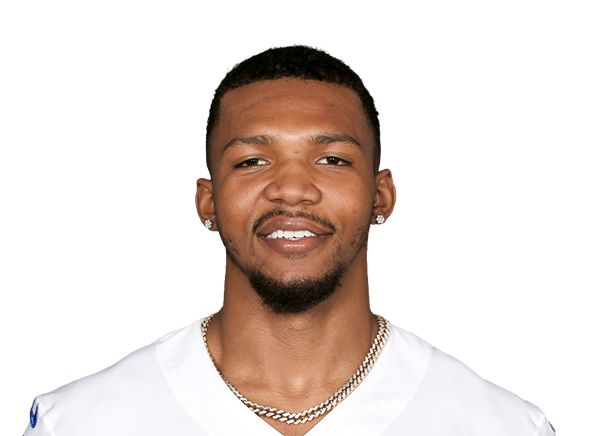
Tony Pollard is being priced like a settled low-end RB1 right now. He cleared the injury report ahead of Week 11 after a veteran rest day, he leads Tennessee with 628 rushing yards and six rushing touchdowns through nine games, and his last three games produced 391 scrimmage yards and six touchdowns on 69 touches. That is the kind of stretch that moves a player's stock fast, and it has. The question for anyone deciding whether to hold, start, or trade him this week is whether that stock movement reflects a real change in his role or a short run of touchdown luck layered on top of a crowded backfield that has not actually thinned out.
The honest answer sits in between, but closer to the skeptical side than the current market price suggests. Pollard's Week 10 line of eight catches for 66 yards and a touchdown on nine targets against Jacksonville looks like a receiving-back breakout. His rushing production in that same game was 33 yards. A fantasy box score does not care how the yards were split, but a forecast should. One huge target count is a data point, not a trend, and the backfield around him did not get any less contested while it happened.
Who Else Is Touching the Ball in Nashville
Pollard is still Tennessee's RB1 on the depth chart, and head coach Robert Saleh has called Pollard and Tyjae Spears the team's bell cows, which is the clearest evidence that the Titans intend to keep splitting this workload rather than hand it to one back. Spears has been dealing with a knee injury, which is the direct reason Pollard's touch count and targets spiked recently, and Spears' possible return in Week 11 is the single clearest threat to that spike continuing. Behind both of them, Tennessee drafted Nick Singleton in 2026 specifically as a competitor for Pollard's rushing and receiving work, and added veteran Michael Carter, whose experience in Saleh's system gives him a path to passing-down snaps. Kalel Mullings is also in camp competing for short-yardage or depth work. None of this is a backfield getting simpler. Quarterback Cam Ward is in his second season as Tennessee's starter, and the available reporting does not identify who is calling plays or describe the scheme in enough detail to say Pollard is operating in a system built to feature him. That absence of a clear offensive identity is itself a reason for caution, not confidence.
The Receiving Role Is the Strongest Case for Pollard
The best argument for paying up on Pollard is that nine-target game. A back who commands that kind of passing-down volume has a weekly floor that committee backs without receiving roles simply do not have, because catches and short gains accumulate points even in a game where the rushing attack stalls. If that target share is real and durable, Pollard is not just a touchdown-dependent flex play, he is a weekly starter regardless of the Titans' game script. Saleh's bell-cow language supports the idea that Pollard is meant to be on the field in obvious passing situations, not just early downs.
The Touchdown Streak Is the Other Half of the Case
Six rushing touchdowns on the season and six more touchdowns across his last three games is a real scoring rate, and touchdowns are what separate an RB2 from an RB1 in weekly fantasy scoring regardless of how the yardage is distributed. If Tennessee keeps using Pollard near the goal line, the touchdown equity alone keeps him fantasy-relevant even in games where Spears or Singleton siphon early-down carries. A player who scores is a player who gets started, and that argument does not require the receiving role to hold at nine targets a week.
Why the Spike Still Doesn't Change the Verdict
Someone bullish on Pollard right now would say the combination of a clean injury report, a bell-cow designation from his own head coach, and back-to-back big fantasy weeks is exactly what a sustained RB1 run looks like, and that betting against a hot hand in a contract year is a mistake. That is a fair reading of the recent box scores. But it treats one receiving-heavy outlier game as the new baseline instead of as a data point produced by Spears' absence, and it is a data point that comes with a built-in expiration: Spears' return is already identified as the specific factor that could cut into Pollard's receiving work in Week 11. It also assumes a 29-year-old back in the final year of his contract, sharing touches with a rookie the team drafted specifically to take some of that workload, is the player getting more involved rather than less as the season goes on. The touchdown streak compounds the risk rather than offsetting it. Six scores in three games is concentrated, and touchdown rates for any running back tend to regress toward his season average rather than his hottest stretch, which for Pollard was built on 33 rushing yards in the same game that produced the touchdown. Strip out that few-week sample and what is left is a committee back in an offense whose scheme and play-caller are not even clearly established in current reporting.
The Call for Your Roster
The tiebreaker is Spears' health status. If Spears returns to full passing-down duty in Week 11, Pollard's recent target spike was a temporary byproduct of an injury absence, not a role change, and the touchdown streak alone is not durable enough to carry him into weekly RB1 territory against a Singleton rookie workload and a Carter complement both still competing for touches. Treat Pollard as a matchup-dependent RB2 rather than a locked-in RB1 this week and the rest of the season. If you hold him, start him in favorable matchups and keep him on your bench the weeks Tennessee faces a stacked front, but do not hold the line at his current price if a trade partner is offering a consolidation deal built on his last three weeks. Sell into the hype; the role underneath it has not actually changed.