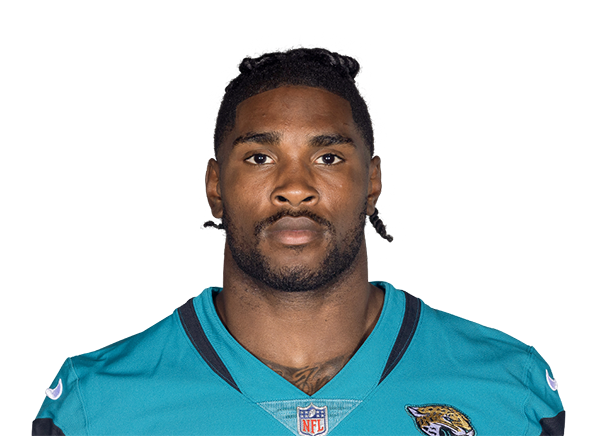
Tank Bigsby is being drafted in the RB50 to RB53 range, with an overall price sitting around pick 157 to 166. That is the cost of a player fantasy managers expect to forget about by Week 3. It is not the cost of a back who ranked top-five in yards created per touch and yards after contact per attempt last season, who forced missed tackles on 28.3 percent of his rushing attempts, and who posted 5.9 yards per touch in the sample available. The gap between that price and that profile is the entire story here.
None of this means Bigsby wins a starting job. He does not, and the reporting is not close on that point. But the proposed idea that he is a committee dart with no defined role is also wrong. He is the clearly established No. 2 back in Philadelphia, and the price has not caught up to what that specific job is worth behind a workhorse with real injury risk.
The Backfield Behind Saquon Barkley
Bigsby's room is simple. Saquon Barkley is the unquestioned starter and the offense is built around him and quarterback Jalen Hurts. Behind Barkley, the Eagles' depth chart lists Bigsby ahead of Will Shipley, Dameon Pierce, and Carson Steele. That ordering matters more than it sounds. It means when Philadelphia needs a change-of-pace or injury-replacement carry, Bigsby is first in line, not fighting through a three-man scrum.
The last two weeks have tested that pecking order directly. On Aug. 17, Bigsby sat out with a toe issue, and the healthy reserves behind Barkley were listed as Shipley, Steele, and Ja'Quinden Jackson. By Aug. 19, Bigsby was back at practice. In the preseason loss to Baltimore, he logged only two carries for five yards and one target, a small sample that reflects standard preseason RB2 usage rather than any erosion of his standing. Nothing in that stretch suggests Philadelphia views him as anything other than the primary backup.
The Efficiency Case for Paying Up
The strongest argument for Bigsby is not his role, it is what he does with touches inside that role. After Philadelphia acquired him last season, he carried the ball 58 times for 344 yards and two touchdowns, a 5.9 yards per carry mark in that Eagles sample. That is not a product of scheme generosity alone. The same efficiency shows up in the more granular numbers: top-five marks in yards created per touch and yards after contact per attempt, and missed tackles forced on 28.3 percent of his rushing attempts. Backs who profile that way on limited touches tend to produce well above their touch share whenever the touch share expands.
Why the Market Hasn't Caught Up Yet
Current projections list Bigsby at 104.6 rush attempts, 510.9 rush yards, 4.2 rushing touchdowns, 3.8 receptions, and 78.4 fantasy points for the season. Those are backup numbers, and if Barkley plays every week, that is roughly the outcome. But one ADP dataset showed Bigsby rising 11.60 spots in a single week, from Aug. 11 to Aug. 18, landing at 137.57 in that specific sample. That is late-summer money moving toward him even before the season starts, which usually signals that sharper drafters are pricing in more than the projection assumes. At RB50 to RB53, he is still cheap relative to that signal.
The Case That He's Just a Handcuff, Nothing More
The honest counter-argument deserves full weight. Every piece of available reporting describes Bigsby as a backup, not a challenger. He was characterized as the Eagles' No. 2 back behind Saquon Barkley, full stop, with no language anywhere suggesting a competition for lead work. His preseason usage was minimal. His efficiency numbers, however strong, come from a small sample size behind a starter who is not going anywhere. Barkley is entrenched, healthy, and the focal point of Philadelphia's offense. If Barkley plays a full season, Bigsby's ceiling is a handful of touches per game and little standalone fantasy value. That is a real and current risk, not a hypothetical one, and it is the reason the original framing of Bigsby as a player about to win a primary role does not hold up against the evidence.
The answer to that argument is not to deny it, it is to reprice around it. Nobody should draft Bigsby expecting a workhorse season. The correct frame is asymmetric value: a near-zero cost at his current draft slot against a real chance that an injury to Barkley turns Bigsby into a weekly factor overnight, backed by efficiency numbers that suggest he would not simply survive an expanded role, he would produce in it.
“will operate as the Eagles' No. 2 back behind Saquon Barkley”
— NBC Sports
The Draft-Day Math on Bigsby
Treat Bigsby as a value play at his current RB50 to RB53 cost, not as a lead-back sleeper. He is not going to win the job outright, and any plan built on that premise will be disappointed. What he offers instead is a cheap, well-defined handcuff to a starter with real workload and durability questions, attached to a rusher whose per-touch numbers rank near the top of the league among backs with meaningful sample size. In deeper leagues, or in any format where bench spots go beyond the bare minimum, that combination is worth a pick in the final rounds. The instruction is straightforward: draft him where his ADP allows, do not reach, and understand that his outcome is tied to Barkley's health rather than to any depth-chart battle Bigsby has to win himself.