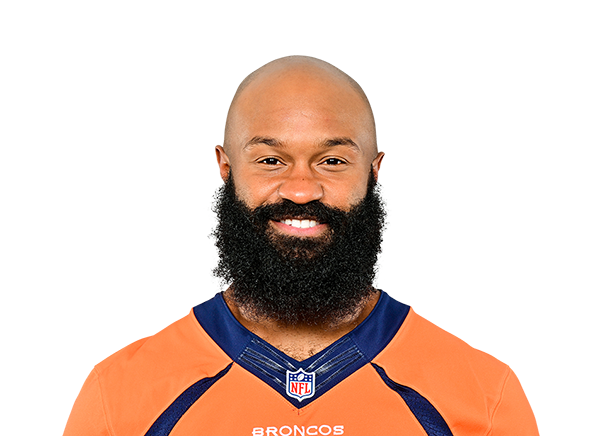
On October 25, Samaje Perine scored a one-yard touchdown against Baltimore. It looked, on the stat sheet, like confirmation that he had carved out a real role in Cincinnati. He had scored in his previous appearance too. Two touchdowns in two games is the kind of thing that moves a waiver wire. But the box score around that touchdown tells a different story: four carries, 16 yards, zero targets, and 12 offensive snaps. Chase Brown played 40.
That gap — 12 snaps to 40 — is the entire article. Perine did not earn a bigger role by scoring. He scored on a small role, in a one-play goal-line situation, and the role did not expand afterward. That is the opposite of what a sustainable workload looks like, and it is the reason this is a sell-high situation rather than a buy-low one.
What Perine Actually Was Before the Touchdowns
It helps to audit, not recite, what Perine has been. In 2025 he played 15 games and finished with 84 carries for 382 yards and three rushing touchdowns, adding 17 catches on 21 targets for 87 yards. That is 5.6 carries and 1.1 receptions per game — a complementary role, not a lead one. The fantasy output matched the role: 77.9 PPR points on the season, 5.2 per game, a finish of RB57. That was not a down year off a bigger platform. It was the platform.
Through Week 7 of 2026, the role has not grown. Perine has played 37% of Cincinnati's offensive snaps, handled 24% of the team's running-back carries, drawn 5% of the targets, and accounted for 17% of red-zone opportunities. A 5% target share is nearly nonexistent for a back who is supposed to offer passing-down value. The only number that has moved in his favor is touchdowns, and touchdowns on a 24% carry share are the least repeatable stat in football. Nothing about the underlying usage has changed. The conditions that produced an RB57 season a year ago — low carries, marginal targets, no standalone role — are still fully in place.
The Room Around Him: Brown, Brooks, and a New Play-Caller
Perine returned to Cincinnati on a two-year contract worth up to $3.8 million after two seasons in Denver and Kansas City, joining a backfield that already includes Chase Brown and 2026 sixth-round pick Tahj Brooks. He is expected to compete primarily with Brown for passing-down work and short-yardage touches — not to replace Brown as the early-down runner. Brown has held the clear snap advantage recently, and nothing in the current usage data suggests that changes. Brooks adds a third body to the room, which further caps how much volume is left over for Perine even if Cincinnati wanted to feed him more.
Joe Burrow remains the starting quarterback and Zac Taylor remains head coach, so the passing infrastructure around this offense has not shifted. What did change is the play-caller: Brian Callahan left to become Tennessee's head coach, and quarterbacks coach Dan Pitcher was promoted to offensive coordinator. Pitcher has been directly asked about the touch split, saying the team would "continually assess how that touch share between [Perine] and Chase Brown should play out." That is not the language of a coordinator who has already settled on expanding Perine's role. It is the language of a staff monitoring a committee, carry by carry, week by week.
The Goal-Line Argument, Steelmanned
The honest counter-case here is goal-line access. Perine scored in consecutive appearances, and his bigger-bodied, veteran profile is exactly the kind of skill set teams preserve for short-yardage work even when a lighter back holds the early-down job. If Cincinnati continues funneling him the ball inside the five, touchdowns alone could make him usable in deeper or touchdown-heavy formats regardless of his snap count.
The problem is how thin that path is. A 17% red-zone opportunity share is not a guaranteed role — it is a minority share that can evaporate the moment Brown gets one of those scores instead, or the moment Cincinnati simply runs fewer plays from the one-yard line in a given week. The Week 7 game is the clearest illustration available: Perine got the goal-line carry and the touchdown, and his overall workload still shrank to 12 snaps and zero targets. A role built entirely on scoring chances, with no target share and a shrinking snap share around it, is not a floor. It is a coin flip that happened to land right twice.
The Call: Sell the Touchdowns, Not the Role
Nothing about Perine's situation argues for treating him as a top-30 running back the rest of the way. He is the clear No. 2 behind Chase Brown in a backfield that also includes Tahj Brooks, playing under a new offensive coordinator who has explicitly described the touch split as unsettled rather than won. His 2025 season already showed what a full year of this profile looks like — RB57, 5.2 points per game — and the early 2026 data shows the same shape: low carries, almost no targets, occasional goal-line touches that produce touchdowns without producing a real role.
The practical move is to treat the two-touchdown stretch as the asset's peak value rather than its baseline. In shallower leagues, this is not a roster spot worth holding over a player with an actual path to more touches. In deeper or touchdown-dependent formats, he is a streamable matchup flex on weeks Cincinnati is expected to score inside the five — nothing more. Anyone who acquired him off the recent touchdowns should be looking to flip him now, while the name still carries the memory of two scores, rather than waiting for the snap-count regression that the Week 7 box score has already previewed.