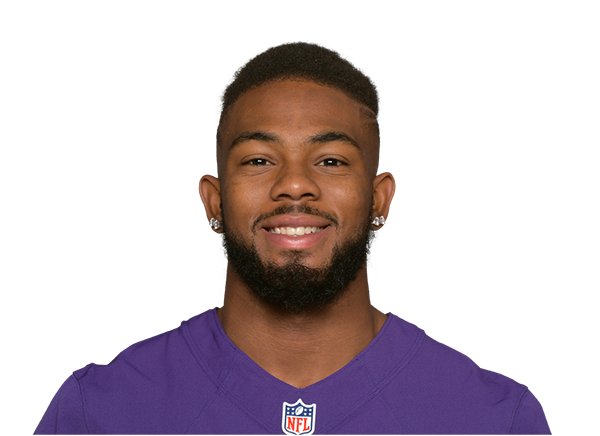
Rashod Bateman's target share and route participation point to a real WR2 role in Baltimore's offense, and if that volume holds up over a full season, a fringe top-15 finish at the position is a plausible outcome. That claim matters right now because Bateman's 2025 season totals — 19 catches, 224 yards, 2 touchdowns across 13 games — look like the profile of a bench stash, not a roster priority. The gap between that disappointing production and what actually happened on the field in Week 2 of 2026 is the entire fantasy case here.
The counter-argument writes itself: Bateman has been famously unreliable as a weekly fantasy piece, his 2025 line was thin even accounting for missed time, and his signature Week 2 performance came with Baltimore's actual top receiver sidelined. All of that is true. None of it changes the fact that when Bateman was on the field with real opportunity in front of him, he produced at a rate that would make him a weekly must-start. The question isn't whether Bateman can produce. It's whether the role that produced it is durable.
Where Bateman Sits Behind Zay Flowers and Ahead of LaJohntay Wester
The Ravens' receiver room has not been overhauled. Baltimore's clearest veteran addition at the position this offseason was Chris Moore, a depth piece who does not project to meaningfully cut into Bateman's routes or targets. The unofficial depth chart currently lists Bateman as a starter ahead of LaJohntay Wester at his outside spot, and reports out of camp and early September describe the new coaching staff pushing to get him more usage, not less. That is the opposite of a player getting squeezed out.
The real competition for targets is Zay Flowers, who Bateman himself has called Baltimore's No. 1 receiver. That matters because it frames exactly what kind of role Bateman occupies: not the alpha, but a legitimate co-starter in an offense that has shown it will feed him heavily when the opportunity is there. Flowers' hamstring injury opened the door in Week 2, and Bateman walked through it. The fantasy question is whether the door stays open even a little once Flowers is back, and the early staff commentary suggests it will.
A New Coordinator, the Same Quarterback
Lamar Jackson remains the starting quarterback, so the most important variable in Bateman's outlook — who is throwing him the ball — has not changed. What has changed is the coaching staff around him. Jesse Minter is now the head coach and Declan Doyle is the offensive coordinator, replacing the prior staff entirely. New play-callers do not always mean more usage for an incumbent receiver, but the early signal here points that way: multiple reports describe the new staff emphasizing Bateman specifically, and his role in Week 2 — 54 of Baltimore's 58 offensive snaps and nine targets — is not the workload of a player being phased out under new management.
Bateman's own contract situation reinforces that read. He signed a three-year, $37 million extension in June 2025, and that deal carries one of the Ravens' top cap charges at receiver entering 2026. Teams do not typically hand out that kind of money to a player they intend to marginalize in a coordinator change. The financial commitment and the on-field usage are pointing in the same direction.
The Role Never Actually Left, the Scoring Did
This is the core of the buy-low argument. Bateman's 2025 season totals look like a wasted roster spot, but the route participation data from 2026 tells a different story: he has run a route on 86% of Baltimore's dropbacks through two games, a rate that ranked 18th among all NFL pass catchers at the time it was measured. That is not the route rate of a fringe piece. It is the route rate of a player the offense is actively building around, whose finishes simply have not caught up to the role.
Week 1 looked like more of the same disappointment — zero catches on a single target, with one additional catch erased by penalty. Then Week 2 happened: seven catches on nine targets for 88 yards and a touchdown in a 24-17 loss to New Orleans, his most receiving yards in a game since Oct. 30 of last season. The Ravens lost that game, which matters for context — this wasn't garbage-time volume in a blowout win, it was Bateman as the focal point of a competitive offensive game plan. A coach's Monday comment captured the shift directly: Baltimore had confidence in Bateman and felt he recognized the opportunity created by Flowers' absence and took it upon himself to produce.
“We have a lot of confidence in 'Bate' and I felt like he took it upon himself to kind of know that we were missing a key guy and that he was going to have some opportunities.”
— a Ravens coach
The separation between usage and scoring is the entire fantasy thesis. A route rate in the 86th percentile range and a near double-digit target game are not the product of luck. They are the product of a passing offense turning to Bateman when it needed a play, and that willingness to target him heavily is the leading indicator that matters more than any single box score.
The Flowers Problem
The strongest objection to this whole case is straightforward: Bateman's breakout came in the one game Zay Flowers didn't play. Flowers is, in Bateman's own words, Baltimore's No. 1 receiver, and the Ravens have consistently spread the ball around their receiver room rather than funneling it to one player. If Flowers returns to full health and full target volume, Bateman's target load could easily revert toward the modest 2025 numbers rather than the Week 2 spike. That is a real risk, not a hypothetical one, and it is the single biggest reason Bateman is a buy-low candidate rather than a locked-in WR2.
The answer to that objection is not that the risk is imaginary — it is that the floor beneath it has moved. Bateman's 86% route rate predates any Flowers absence; it reflects his baseline role in the current offense, not a one-week emergency promotion. A co-starter who runs a route on the vast majority of dropbacks and still earns nine targets in a game his top receiver misses is a different proposition than the player who finished with 19 catches across 13 games in 2025. Even a moderate reversion, with Flowers healthy, still leaves Bateman with more consistent volume than his name currently commands on the waiver wire or in trade value.
What To Do About It
Fantasy managers should treat Bateman as a buy now, before Flowers' return resets public perception back toward the disappointing 2025 numbers. His price is still anchored to a season that no longer reflects the coaching emphasis, the route participation, or the contract commitment currently in place around him. The fair expectation is not a locked top-10 receiver — it is a legitimate flex-to-WR2 weekly option with the kind of role that supports a fringe top-15 finish if the volume from Week 2 proves closer to his baseline than his ceiling. That is the profile of a buy-low, not a lottery ticket, and it is worth acting on before the rest of the league catches up.