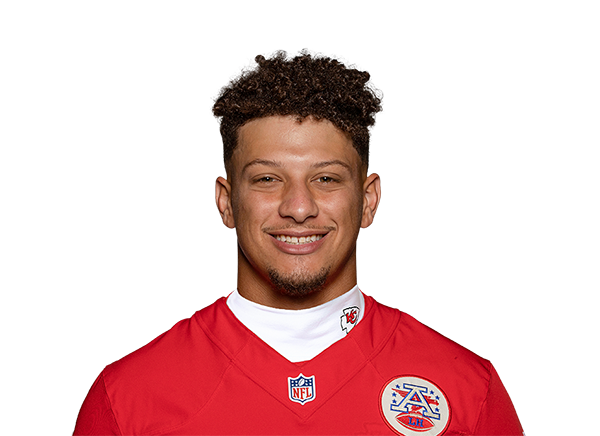
Patrick Mahomes is going off draft boards as the 14th or 15th quarterback taken, somewhere around pick 105 to 121 depending on the platform. That is backup-caliber pricing for a player who is still Kansas City's unquestioned starter, still the hub of Andy Reid's offense, and still throwing to a re-signed centerpiece tight end. The market is not pricing Mahomes as a player with a diminished role. It is pricing him as a player with a diminished knee, and it is doing so before a single 2026 snap has been played against a real opponent.
That distinction matters. A role that has not changed and a body that is still proving itself are two different risks, and only one of them should move a draft price by nine or ten rounds. Mahomes tore his ACL in December, did not play in the preseason, and there are legitimate questions about whether his scrambling ability returns intact. But the offense around him has not been dismantled. It has been reinforced in some spots and left alone in others. The price assumes the worst version of the recovery. The evidence available right now does not force that assumption.
Kelce, Rice, and Walker: Who Eats in the Offense Mahomes Runs
The receiving room lost a piece and kept its anchor. Marquise Brown is gone, which removes a vertical option from the route tree, but Rashee Rice sits atop the depth chart as Kansas City's WR1 and remains the player Mahomes targets most when the offense needs a chain-mover. Travis Kelce was re-signed in March 2026, which matters more than it sounds. Kelce has thirteen years of experience and is still the security blanket Mahomes has trusted through every stretch of his career, and keeping him in the building means Mahomes did not lose his most reliable third-down and red-zone answer during an offseason that already asked him to trust a rebuilt knee. On the ground, Kenneth Walker III arrived in March 2026 and now sits as the depth chart RB1, which increases competition for touches near the goal line but does not touch Mahomes's passing volume directly — Kansas City's running back room absorbing carries is not the same as Kansas City's passing offense absorbing targets away from its quarterback.
The bigger structural change is at play-caller. Eric Bieniemy was hired in January 2026 to replace Matt Nagy, who left after the 2025 season. That is a real variable — a new offensive coordinator changes tendencies, personnel groupings, and situational calls. But the offense is still Reid's, and Reid remains the head coach shaping the system Mahomes has run his whole career. Kansas City also added Justin Fields at quarterback in a trade with the Jets, which reads as competent backup insurance behind a starter coming off a major injury, not as a threat to the job Mahomes still holds.
The Case for Paying the Price: A System That Never Actually Left
The strongest argument for drafting Mahomes at his current cost is that nothing about his role has been taken away. He is still QB1 on the depth chart, still throwing to a tight end the organization chose to keep, and still working behind a head coach whose system defined his best fantasy seasons. When a player's ADP collapses, the first question should be what got taken from him — a starting job, a top target, a play-caller who fed him volume. None of those has happened here. What changed is the health question mark, which is a real discount but not the kind that should drop a healthy starting quarterback to fifteenth at the position.
The Case for Paying the Price: The Market Is Already Bracing for Bad News
Reid said on September 3 that Mahomes "is doing great" and that he "spent seven hours a day here the whole offseason and just busted his tail." Sean Payton, preparing an opposing defense for Week 1, said his team is preparing for "Patrick Mahomes at his best." Those are not neutral statements from disinterested parties — an opposing head coach has no incentive to overstate a recovering quarterback's readiness. When the price already assumes decline and the people closest to game-planning against him are not treating him as diminished, that gap is exactly where value gets built.
Why a Skeptic Would Fade Him Anyway
The counter-case deserves its full weight. Mahomes did not play preseason snaps. He is coming off a torn ACL, and at least one report has NFL executives questioning whether he can still move the way he used to, which matters for a player whose rushing production has always been part of his fantasy floor. His 2025 season — 3,587 passing yards, 22 touchdowns, 11 interceptions across 14 games, with 422 rushing yards — was already a step down from his own peak before the knee injury entered the picture, and his 2024-2025 combined passer rating of 91.7 is solid but not elite by the standard he set earlier in his career. Add in reports that Kansas City's receiving corps has its own injury concerns, and the case writes itself: a mobility-limited Mahomes throwing to a banged-up receiving room under a first-year play-caller could easily settle in as a middling QB1 rather than a top-five finisher.
That case is honest, and it is the reason his price fell in the first place. But it proves too much. A player who was already producing QB1-caliber counting stats in 2025 before the injury, who kept his top tight end, who kept his starting job, and who has both his own head coach and an opposing head coach speaking about him as if he is at or near full strength in September, is not the same profile as a player who lost his role. The knee is a real discount. It is not a fifteen-spot discount.
The Tiebreaker: Draft the Role, Not the Rehab Headlines
The tiebreaker here is simple: fantasy drafts price players on role and opportunity first, and health second. Mahomes has not lost either the role or the opportunity — he has an open health question that the people around the situation are actively downplaying in public. That combination is exactly what creates a mispriced asset. The instruction that follows is to treat his current ADP, in the QB14-QB15 range, as a gift rather than a fair valuation. Do not chase him into the top five or six quarterbacks off the board — the knee risk is real enough that reaching past a clean QB1 tier would be its own mistake. But letting him fall to a backup-caliber price while he still holds a starting job, a re-signed top tight end, and an unchanged offensive identity is the version of this draft that costs teams a top-ten quarterback for the price of a backup plan.
“We're preparing for Patrick Mahomes at his best.”
— Sean Payton