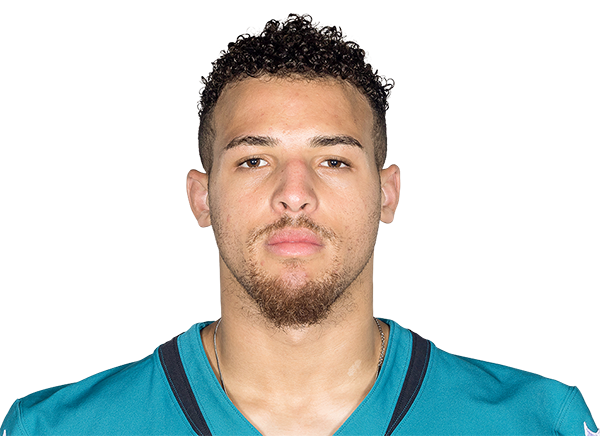
Parker Washington opened 2026 with a 28.6% target share against Cleveland, then followed it with 12 targets against Denver in Week 2, pushing his two-week target share to 37-38% by separate counts. That is not a marginal uptick from a career complementary piece. It is a wholesale reallocation of Jacksonville's passing-game volume toward one player, and the box scores back it up: 5 catches for 83 yards and a touchdown in the opener, then 7 catches on 12 targets for 98 yards in Week 2.
One usage report through two weeks called him "the runaway No. 1 receiver with a 37% target share and 49% air-yard share," and another described him as "the clear alpha in Week 1." Meanwhile, the fantasy market has been slow to move. A Week 2 comparison had him at WR34 in consensus rankings with a WR26 weekly projection - a gap between what he is doing on the field and what he is priced at that is the entire premise of this piece.
From Complementary Piece to Lead Target Earner
It matters what Washington was before this spike, because the answer is not "breakout candidate everyone missed." Since Week 7 of the 2025 season, he ran at a 23% target share and produced as roughly a WR14 on WR12-level usage - solid depth production, not a lead-receiver profile. The obvious question is what changed between that run and the 37-38% share he is posting now, because if nothing structural changed, this is noise.
Two things did not change: Trevor Lawrence is still the starting quarterback, and the offensive design under the same coaching staff is still built around him as the first read on a heavy share of dropbacks. Because the quarterback and scheme are constant, the shift in Washington's target share is not the product of a bigger overall passing pie - it is the product of a shift in how that pie gets divided inside the receiver room. That distinction is the whole ballgame for whether this projects forward or reverts.
Travis Hunter, Brian Thomas Jr., and the Room Around Trevor Lawrence
The receiver room did not stay static this offseason. Travis Hunter arrived via the 2026 draft as a two-way wide receiver/cornerback and is a legitimate new claim on perimeter and slot snaps, even if his role has not yet displaced Washington's usage in the numbers above. On the departure side, Jacksonville trimmed Austin Trammell along with several other depth names in final roster cuts - none of them high-volume target earners, so their exits freed up bodies on the roster more than they freed up meaningful target share.
The more important name is Brian Thomas Jr., who sits above Washington on Jacksonville's depth chart as the presumptive WR1 and is the receiver this claim has to survive contact with. Thomas was dealing with a shoulder issue in the preseason and early-season window, and that detail cannot be separated from Washington's early target surge. A compromised Thomas is a plausible - maybe the primary - explanation for why targets funneled toward Washington instead of Jacksonville's higher-pedigree receiver. If Thomas returns to full health and reclaims his standing atop the depth chart, some of Washington's target command should migrate back with him. That is the single biggest variable in this entire projection, and any bullish case that ignores it is incomplete.
Lawrence himself is also a source of volatility rather than certainty here. In Week 1 he targeted ten different players, which shows an offense willing to distribute volume broadly even in the same game Washington posted his highest target share. A quarterback who spreads the ball that widely can just as easily redistribute it away from any single receiver in a given week, Washington included.
The Case for Regression - and Why It Doesn't Erase the Role
The strongest counter-argument is straightforward: two games is a small sample, even the bullish usage report conceded Washington "won't maintain those numbers," and the Brian Thomas Jr. health question alone is reason enough to expect the target share to come down from 37-38%. That is a fair and evidence-backed objection, and it should temper any claim that treats the current pace as a full-season baseline.
But regression toward a still-useful number is different from regression toward irrelevance. If Washington settles back toward his prior run-rate - the 23% target share and WR14-on-WR12-usage line he carried since Week 7 of last season - that still clears the bar for a startable receiver in most formats, not a depth-chart afterthought. Add in that he is also listed as Jacksonville's punt returner, which gives him a return-touchdown and field-position floor that a pure route-runner does not have, and the range of outcomes skews toward useful even in a down week for targets.
“He won't maintain those numbers, but a 30% target share might be in play. Washington looks like at least a low-end WR1 for fantasy.”
— a September 21, 2026 usage report
There is also a quieter, non-statistical factor worth naming: Washington enters 2026 in the final year of his rookie contract, with extension talks that were active into early September but unresolved before Week 1. A player playing for his next deal has every incentive to maximize every route and every target the staff gives him, and nothing in the offseason moves - Hunter's arrival aside - suggests the team brought in someone who has already taken his role away.
The Add-Now Verdict
Market coverage from mid-September was blunt about the pricing gap. One report put it plainly.
“Buy him now before the price increases.”
— September 16, 2026 fantasy market coverage
That is the right read. Washington's target share will not stay at 37-38% once Brian Thomas Jr. is fully healthy and reasserts himself as the depth-chart WR1, and Travis Hunter's presence adds a real, if still unquantified, drain on the room's targets. But the underlying role change - Trevor Lawrence and this coaching staff trusting Washington as a first-read, high-volume option through two full games - is real, not a two-game illusion, and it is not being priced that way in consensus rankings that still had him outside the top-30 receivers entering Week 2.