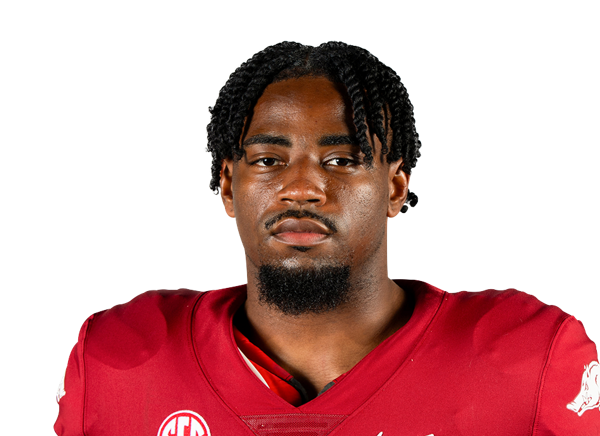
Right now, Mike Washington Jr. costs almost nothing. He is rostered in roughly three of every ten leagues, which means the overwhelming majority of fantasy managers can add him for the price of a waiver claim or a modest bid. What he might return is a different question entirely, and the gap between that low price and his plausible value is exactly why this is worth sorting out before Week 9 lineups lock.
The catalyst is simple to state and harder to project. In Las Vegas's Week 8 win over the New York Jets, Washington carried the ball 25 times for 83 yards. Ashton Jeanty, the back the Raiders traded up to take in the first round and the presumptive lead of this backfield, got two carries in the same game. That is not a normal committee split. That is a workload inversion, and the fantasy market has not finished pricing it in.
The Crowded Backfield Behind Ashton Jeanty
Washington arrived in Las Vegas as a fourth-round pick, selected 122nd overall on April 24 after the Raiders traded up on Day 3 to get him. He entered a running-back room that already included Jeanty as the headline name, plus Dylan Laube, Roman Hemby, and Chris Collier filling out the depth chart. Nothing about his draft slot suggested an imminent takeover. Early-season reporting described him as working his normal role behind Jeanty, not as a challenger for the starting job.
The coaching staff changed over the offseason — Klint Kubiak replaced Pete Carroll as head coach — but the available reporting does not establish a corresponding change at offensive coordinator or play-caller beyond that. Kirk Cousins is the Raiders' starting quarterback. None of that machinery points toward Washington by design. What changed was in-game usage, not the org chart that produced it, and that distinction matters for how much confidence to put in the split holding.
The Case for Priority Waiver Dollars
The strongest argument for adding Washington this week is the raw shape of the Week 8 snap allocation. Twenty-five carries to two is not a game plan quirk you get by accident; it reflects a coaching decision to hand the early-down rushing role to one back and route the passing-game work through the other. A report following the game said Jeanty had been told Washington was now the starter. That is secondhand and not a direct coach quotation, but it is also the clearest signal available that Las Vegas may intend to carry this split forward rather than treat it as a one-week anomaly.
Why the Workload Alone Changes the Math
Set the efficiency aside for a moment and look only at touches. A back getting 25 carries in a single game is getting fed at a rate that, if it holds even at a reduced level, clears the 12-touch weekly bar that typically supports flex-caliber fantasy production. Washington's season-long numbers through Week 8 — 29.6 PPR points over seven games, a 4.2-point weekly average, a ranking outside the top 50 at the position — look nothing like a player worth owning. But those numbers were built on a different role: before Week 8, he had never reached double-digit carries in a game, including six carries for 27 yards the week prior. The volume, not the per-carry efficiency, is the entire thesis. If the role repeats, the weekly point total catches up quickly even at modest yards-per-carry.
The Counter: One Game Isn't a Depth Chart
The skeptical case deserves a fair hearing, because it is the more statistically grounded one. Washington turned 25 carries into just 83 yards, a 3.3 yards-per-carry average that is unremarkable on its own. Jeanty was not injured or inactive — he was on the field and still involved as a receiver and in pass protection, which is the kind of role split a coaching staff sometimes installs for a single game plan against a specific opponent rather than a permanent change in command. No verbatim quote from Kubiak confirming a lasting depth-chart shift is available in the reporting; the strongest piece of evidence for permanence is a secondhand account of what Jeanty says he was told, not a coach's public statement. A fourth-round rookie taking over the backfield from a back Las Vegas invested a premium draft asset in is the kind of story that sounds better after one big game than it often looks a month later.
That argument is reasonable, and it is the right prior to hold if you are being disciplined about small samples. But it does not erase what actually happened on the field. A 25-2 carry split is not subtle usage; it is the kind of split that shows up when a staff has decided, at least for now, who they want running the ball on early downs. The counter-argument correctly lowers the probability that this is permanent. It does not lower it to zero, and in a format where the acquisition cost is a bench spot and a waiver claim, the question is not whether the role is guaranteed to last — it's whether the upside justifies the cheap ticket.
What to Do With Washington This Week
The tiebreaker here is cost. A rostered-in-31%-of-leagues running back who just posted a 25-carry workload is not a player you can afford to let someone else grab first, even with real uncertainty about whether Week 8 repeats. The downside if the role reverts is that you've spent a waiver claim on a bench piece you can drop in three weeks. The downside if it holds and you pass is that you watch a free top-30 weekly producer play out the string on someone else's roster. Claim him now, but set your expectations at the evidence rather than the headline: treat him as a volume-dependent flex play who needs to see another week or two of early-down work before he belongs in your starting lineup over a proven option. Watch the next Raiders box score closely — the carry count, not the yardage total, is what will tell you whether this was a real promotion or a one-week plan against the Jets.