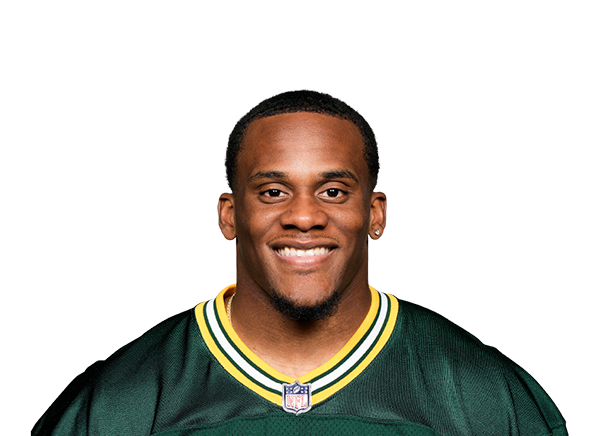
The skeptical case on MarShawn Lloyd writes itself, and it deserves to be taken seriously before anyone rushes to add him. Through five games this season, Green Bay's offense is averaging 60.4 rushing yards and 3.1 yards per carry as a team — numbers that describe a unit struggling to run the ball, not one unlocking a hidden weapon. Lloyd's own line mirrors that: 40 carries for 112 yards, a 2.8 yards-per-carry average, and two touchdowns. In Week 5 against Chicago, he played 27 offensive snaps to Pierre Strong Jr.'s 25 — hardly a workhorse split — while Kaleb Johnson remained part of the rotation. That is not the snap profile of a back who has taken over a backfield. It is the snap profile of a committee that lost one name and redistributed the work among three others.
Layer in Lloyd's medical history and the caution compounds. His 2024 rookie season consisted of a single game. He missed the entire 2025 season with a recurring hamstring injury. A player with that track record commanding real confidence as a league-winning addition is a tough sell on name recognition alone, and nothing in his current workload forces the issue. The strongest version of the skeptical case isn't that Lloyd is talentless — it's that the sample size, the efficiency, and the presence of other bodies in the backfield all argue for patience rather than urgency.
What Green Bay's Backfield Actually Looks Like Right Now
To evaluate the claim fairly, start with who is actually in the room. Green Bay acquired Kaleb Johnson in a trade with Pittsburgh this offseason specifically to compete for early-down work, and he remains part of the rotation behind Lloyd. Pierre Strong Jr. was brought back after finishing last season on the practice squad and is logging snap counts nearly identical to Lloyd's. Damien Martinez and undrafted free agent Jaden Nixon add further camp-level depth, though neither threatens the top of the chart. Emanuel Wilson left in free agency, and his reserve and change-of-pace carries became available to whoever filled the void — which is part of why Lloyd and Brooks both saw expanded roles entering the year.
The single biggest swing factor is Josh Jacobs. He opened the season on the commissioner's exempt list while the NFL investigated a legal matter, missing the first six games and temporarily clearing out the feature-back role that would otherwise have been his. Green Bay's own coverage has since flagged that Jacobs' potential return could change the backfield pecking order. On today's depth chart, Jacobs sits behind Lloyd — but he is on the roster, not gone, and his eventual reinstatement is the central threat to any bullish Lloyd projection. Add Chris Brooks' ankle injury, which landed him on injured reserve on October 10 with a required four-game absence and a possible Week 9 return, and you have a backfield defined by absences rather than by a settled hierarchy. Jordan Love remains the starting quarterback, unchanged from last season, while Adam Stenavich took over as offensive coordinator in March — a leadership change at the play-calling level, though the available reporting doesn't establish how it has specifically reshaped run-game usage.
The Runway Brooks' Injury Actually Opens
None of that complexity erases the fact that, as of today, Lloyd is the starter. Strong is second, Johnson third, and Brooks is out for at least four games. That is a real window, not a speculative one. Lloyd scored the first two rushing touchdowns of his career in Green Bay's 31-7 win over Chicago on October 12, and Green Bay's own team coverage framed him as starting to show why the club selected him in the top 100 of the 2024 draft. A back who was a notable draft investment, who is now atop the depth chart, and who scored twice in a lopsided win is not someone to ignore simply because the per-carry average is unimpressive through a small sample.
The Efficiency Number Deserves a Second Look, Not a Dismissal
The 2.8 yards-per-carry figure is real and it matters — it should temper enthusiasm, not erase it. But it also has to be read against the context of a Green Bay rushing attack averaging only 3.1 yards per carry as a team. Lloyd isn't dramatically underperforming his offensive line and scheme; he is roughly in line with it. That distinction matters for projecting forward. If the team's run-blocking and scheme improve even marginally, a back getting the early-down work benefits disproportionately, and right now Lloyd is getting that work by default of Brooks' absence and Jacobs' continued absence from the top of the depth chart. The question isn't whether Lloyd has been efficient so far — he hasn't been — it's whether he is positioned to capture volume if the offense around him gets even modestly better over the next month.
What Still Has to Break His Way
The honest risks here are specific, not vague. First, Pierre Strong Jr.'s near-even snap share in Week 5 means Lloyd has not separated from the field the way a true lead back would; if that pattern holds, his touch floor stays capped regardless of what the depth chart says. Second, Kaleb Johnson was brought in through a trade specifically to compete for this work, and he remains in the rotation — he is not a camp body who will disappear. Third, and most important, Josh Jacobs' return is not a hypothetical. He was the presumptive feature back before his exempt-list placement, Green Bay's own reporting has flagged his potential return as a pecking-order event, and nothing in the current record suggests the team views Lloyd as a long-term replacement rather than a stopgap. If Jacobs returns to full health and workload before Brooks does, Lloyd's runway could close almost as quickly as it opened. Layer on his own durability history — one game played in 2024, a full season lost to hamstring injury in 2025 — and the swing outcomes on this profile are wide in both directions.
Where That Leaves the Claim
The original framing — that Lloyd simply commands the backfield and locks in as a top-12 back the rest of the season — overstates what the evidence shows. Strong's snap share, Johnson's continued rotation role, and Jacobs' standing return threat all argue against a clean takeover. But the underlying opportunity is real: Brooks is out for at least a month, Lloyd is the current starter, he has scored twice in his last outing, and he is available on most waiver wires given a Week 6 ADP near 125. That combination is worth a claim. The fair claim is that Lloyd leads a thin, unsettled Packers committee and is a legitimate weekly flex or low-end RB2 option for as long as Brooks remains sidelined and Jacobs remains unreinstated — not a locked-in top-12 finisher for the rest of the year. Add him for the next month of starts, but build in the expectation that his role could compress the moment either veteran returns to full health.