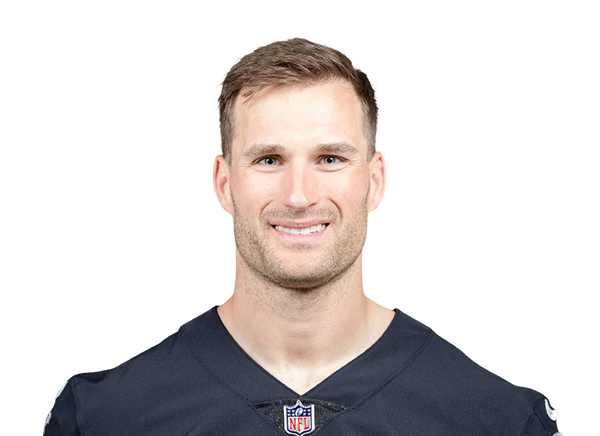
The case for Kirk Cousins as a weekly fantasy starter right now is not a reach. Through eight games in 2026 he has thrown 19 touchdown passes against just five interceptions, ranked third in the league in passing yards, and posted five games of 20 or more fantasy points. In Week 8 he authored his best outing since 2024: three passing touchdowns, a rushing score, and a 38-33 comeback win over the Jets. ESPN ranked him QB11 that week with a 16.6-point projection, and by the dossier's own count he sat fourth among fantasy quarterbacks through the first half of the season. Reasonable analysts are rostering him as a streaming starter and some as a weekly one.
The strongest version of that argument also points to organizational commitment. Adam Schefter reported that the Raiders intended to keep playing Cousins as long as possible, and that the team did not believe he was responsible for a four-game losing streak. A 38-year-old quarterback putting up his best touchdown rate in two years, with his job status reaffirmed by the front office, is not a profile fantasy managers should dismiss out of hand.
What Kubiak, Mendoza, and Bowers Tell Us About the Plan
Cousins signed with Las Vegas as an unrestricted free agent in April 2026 after Atlanta released him in March. That move installed him as a bridge starter in front of Fernando Mendoza, the quarterback the Raiders took with the No. 1 overall pick in the same draft class. The team's stated plan was to develop Mendoza behind Cousins rather than throw the rookie in immediately, which is exactly the posture you'd expect from a franchise that views its starter as a short-term answer, not a long-term one. New head coach Klint Kubiak, who is also the offensive play-caller, previously worked with Cousins in Minnesota from 2019 through 2021, and that familiarity is part of why the touchdown numbers arrived immediately rather than after a learning curve.
On the receiving side, the Raiders' only proven weapon is Brock Bowers, who sits atop the tight end board in this league. There is no wide receiver from Las Vegas on our board at all. That combination, a steady veteran, a play-caller he has prior chemistry with, and a true focal-point tight end, is what the bullish case is pricing in. It is a real setup. It is also a setup that depends on things staying exactly as they are, and two of those things are already showing cracks.
The Touchdown Math Behind the Hot Start
Nine of Cousins' 19 touchdown passes came in the Raiders' first three games. That is not a steady-state rate; it is a hot streak that has been cooling since, and it sits in sharp contrast to his most recent full season of usage. In 2025, playing 10 games for Atlanta, Cousins threw just 10 touchdowns against five interceptions and finished QB35, totaling 108.5 PPR points for the year. The quarterback who produced that season is closer to the real baseline than the one who opened 2026 on a touchdown binge. Week 8 itself illustrates the mechanism: 247 passing yards is a middling total, and the fantasy score was inflated by four total touchdowns, three passing and one rushing. That is a game script-dependent outcome, not evidence of a repeatable, high-floor role. A quarterback who needs four scores to produce a QB1 week, rather than steady yardage and efficiency, is vulnerable to exactly the kind of regression touchdown rates are known for.
Mendoza's Leash Gets Shorter With Every Loss
The Raiders drafted Fernando Mendoza first overall for a reason, and that reason was not to let him watch from the bench for three full seasons. The team's plan, as of early November, was still to let Cousins play, and Schefter reported they did not blame him for the losing streak. But a four-game skid is the kind of stretch that erodes patience fast in a league built around rookie quarterback evaluation windows. Every additional loss raises the pressure to find out what the No. 1 overall pick can do, and that risk sits on top of Cousins' own durability profile. He is 38 years old, and his most recent full season before this one was cut to 10 games. A bridge starter on a losing team, with a premium rookie already in the building, carries snap-count risk that a true top-12 quarterback does not.
Bowers Is Doing More of the Work Than the Box Score Admits
Brock Bowers is the single established weapon in this passing game, and that matters for how to read Cousins' numbers. When a quarterback's touchdown production is concentrated around one elite, separation-creating target with no complementary receiver threat on the roster, it tells you the passing game's ceiling is narrower than the yardage total suggests. A tight end who commands that much of the opportunity share can make any competent passer look efficient in flashes, but it also means the offense has one fewer lever to pull when defenses adjust. There is no proven wide receiver on this roster to stretch a defense underneath Bowers, which raises the odds that Cousins' touchdown rate was propped up by matchups exploiting a single mismatch rather than a repeatable, multi-threat passing attack.
What Would Still Have to Break Right
The honest counter should not be dismissed. If Kubiak's scheme continuity with Cousins produces consistent high-volume passing regardless of score, if Bowers stays healthy and dominant enough to anchor the touchdown rate even as defenses adjust, and if the Raiders hold firm on keeping Mendoza a true redshirt all season, Cousins could keep compiling enough yardage and scores to stay fantasy-relevant on raw volume alone, given he is already third in the league in passing yards. That is a real path to a usable streamer, and in a given week against a favorable matchup, as ESPN's QB11 ranking in Week 8 showed, he can still return starter-caliber numbers. The residual risk to this call is that the floor stays higher than expected simply because of pass volume on a team that is frequently playing from behind.
“The Raiders’ plan continues to be to play Kirk Cousins as long as possible.”
— Adam Schefter, as reported by DraftSharks
That commitment is real, but it is a plan for today, not a guarantee for December. The dynasty market has already registered the skepticism: one report valued Cousins around QB32 with roughly a 2027 early third-round pick attached, a sharp discount from his in-season QB11 matchup ranking. That gap between short-term usability and long-term value is the whole story.
The Verdict on Cousins Going Forward
Kirk Cousins is not a bust and he is not unrosterable. He is a matchup-dependent streaming option propped up by one dominant tight end and a touchdown rate that already shows signs of cooling from its season-opening peak. The four-touchdown Week 8 was a real game, but it was built on 247 passing yards and four total scores, not sustainable efficiency. With Fernando Mendoza developing behind him and no proven receiver to diversify the passing attack beyond Brock Bowers, the more likely outcome is a quarterback who finishes outside the top 12 at the position. Treat him as a streamer for favorable matchups and sell any dynasty value now, while the Week 8 line still inflates his price, rather than holding him as a weekly starter through the rest of the season.