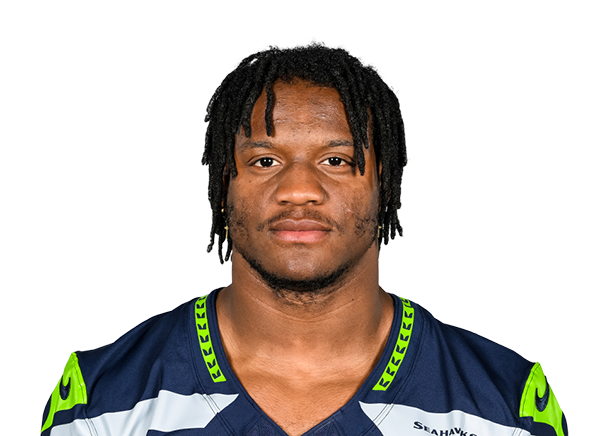
Kenneth Walker III finishes 2026 as a top-12 running back. That is the claim, and it matters right now because the market is still catching up to it in real time — his average draft position has been climbing through late August and into September, and the gap between where he is currently being drafted and where his per-touch profile says he belongs has not fully closed.
A year ago, Walker was a cautionary tale rather than a sleeper. StatMuse data has him finishing as only the 27th-highest scorer at the position with 181.2 fantasy points, a number that one projection model had actually pegged at RB19 heading in. That kind of finish is exactly how a former high-profile back quietly loses his market price — not through a single bad game, but through a season that never matched the workload projections built around him. The question for 2026 is whether anything has actually changed. It has, and the change is not incremental. Walker changed teams.
Leaving Seattle's Crowded Backfield for a Clean Role in Kansas City
Walker's Seahawks contract ended, and he signed a three-year deal with the Chiefs in March 2026. That single transaction did more to reset his outlook than anything a coordinator change or a training-camp battle could have. Seattle did not stand still after he left. The Seahawks added running back Emanuel Wilson in free agency and used a 2026 draft pick on Jadarian Price, with reports in late April describing Price as expected to step directly into the role Walker vacated. Seattle's depth chart still lists George Holani, Kenny McIntosh, Velus Jones Jr., Jacardia Wright, and Cam Akers, but Wilson and Price are the two backs clearly brought in to eat the touches Walker left behind — which tells you Seattle was not planning to simply hand the job back to him even if he had stayed.
In Kansas City, that competition simply does not exist. Today's depth chart lists Walker as the Chiefs' RB1, and he steps into an offense run by Patrick Mahomes, with Rashee Rice as the top wide receiver and Travis Kelce still occupying the tight end spot. That trio does not compete with Walker for touches — if anything, a Mahomes-run passing attack that consistently forces defenses to respect Rice and Kelce is the exact environment that opens rushing lanes for a back who no longer has to fight a stacked box play after play. One projection model already reflects this, estimating roughly 17.5 carries and 3.4 targets per game for Walker in Kansas City's system, a workload befitting an every-down back rather than a committee piece.
The Efficiency Profile That Survived a Loaded Box
The strongest evidence for Walker is not projection-model optimism. It is what he already did in a harder environment than the one he is stepping into. In the season referenced by one fantasy preview, Walker ran for 1,027 yards at 4.6 yards per carry while facing the NFL's third-highest stacked-box rate. That preview also credited him with the second-highest explosive-run rate at the position, along with 313 postseason yards and four touchdowns in the playoffs. Defenses were selling out to stop him and he was still breaking off explosive gains — a profile that reads much better once you consider that Kansas City's offense is unlikely to see defenses loading the box against Walker the way Seattle's did, given the attention Mahomes and Rice command through the air.
That is the part of the post-hype thesis that holds up under scrutiny. Walker's disappointing overall fantasy finish last year was a volume and scheme story, not a talent story. The per-carry evidence says the talent never left; the offense around him just made every carry harder to convert into a big fantasy day. Removing that friction — while keeping the underlying explosiveness — is the single cleanest path to a top-12 finish this year.
A Market That Is Already Catching Up
The market has not missed this story entirely, which is itself informative. One source has Walker at RB12 in PPR ADP. A separate late-August snapshot had him at ADP 14.9 with a model ranking him RB10 and explicitly arguing the price still left room for profit. By September 3, a fantasy report had his average draft position moving up three slots to roughly pick 17 overall. None of that is a hidden sleeper price — it is a price actively rising as more drafters notice the same role clarity described above. The relevant question for a fantasy manager is not whether Walker is undervalued in some absolute sense, but whether a top-12 seasonal finish is still available at a cost that sits closer to RB10-RB17 territory. Given the workload estimate and the efficiency profile, it is.
The Volume Question Nobody Can Fully Answer Yet
The honest counter-argument here deserves real weight. One projection model still lands Walker around RB19 in projected fantasy points, which suggests that even accounting for the move to Kansas City, some analysts do not expect his target share or overall touch count to be elite. A top-12 running back finish typically requires either heavy receiving work or clear goal-line priority, and if Kansas City disperses touches more broadly than the 17.5-carry, 3.4-target estimate implies, Walker could turn in strong per-touch efficiency without cracking the top tier at the position. There is also a health flag worth naming directly: Walker was held out of the preseason finale in late August because of ankle swelling. Andy Reid downplayed it — "He's OK. He's going to be fine. We're just trying to get that swelling out of there" — and one fantasy report attributed the swelling to a footwear issue and called it minor, but any absence, however brief, is the kind of thing that erodes a workload before it ever gets going.
Both concerns are legitimate, but neither one undoes the core case. A projection model landing him at RB19 is working from more conservative touch assumptions than the 17.5-carry, 3.4-target model that produced an RB12 outlook — the two disagree on inputs, not on Walker's per-touch ability. And an ankle issue that a head coach frames as minor swelling, tied to equipment rather than a structural injury, is not the same signal as a soft-tissue tear or a recurring problem. The realistic risk is a slow week or two, not a lost role.
What Fantasy Managers Should Do Now
Draft Walker as a low-end RB1 rather than a luxury upside dart, because the workload estimate and depth-chart clarity in Kansas City support that range even before factoring in his per-carry track record against difficult boxes. He is currently attainable in the RB10-to-RB17 band across the sources cited here, and that price still leaves room for the top-12 outcome to pay off handsomely relative to cost. Managers who already own him should not be tempted to sell on a name that briefly went cold — the 27th-place finish last year was a product of a crowded, defense-focused Seattle scheme that no longer applies. Managers deciding between Walker and a similarly priced back should give real weight to the fact that nobody currently on Kansas City's roster is positioned to meaningfully cut into his touches, while the backs who inherited his old role in Seattle — Wilson and Price — are exactly the reason his workload reset rather than simply relocated.