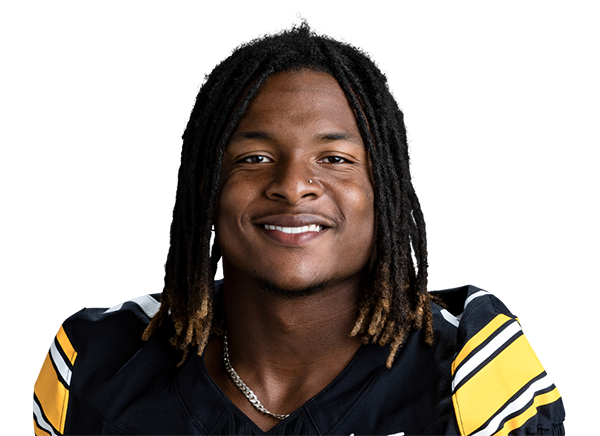
Kaleb Johnson's Week 9 line against New England — 14 carries, 68 yards, one touchdown — is the best game he has played as a Packer, and it is being read by a lot of fantasy managers as the arrival of a lead back. It is not. Two runs of 34 and 31 yards accounted for 65 of his 68 rushing yards, and his first career touchdown came in a blowout win. Strip those two plays away and Johnson gained three yards on twelve carries. That is not a role change. That is a hot box score sitting on top of the same crowded committee he was stuck in for a month.
The claim matters now because Johnson is going to be a popular waiver add this week, and the opportunity behind the headline is thinner than it looks. Josh Jacobs' broken finger and MarShawn Lloyd's knee injury created the opening, not anything Johnson did to earn a bigger role on his own. He is worth owning as a speculative flex. He is not worth trading for as a top-20 running back, and he is not that yet.
Jacobs, Lloyd, Strong, and Brooks Still Stand Between Him and Volume
Green Bay acquired Johnson from Pittsburgh on August 30, 2026, for a 2028 sixth-round pick, and his rookie contract runs through 2028 regardless of role. That is a long runway, but it has not translated into standing on the depth chart. The Packers kept only three running backs active on game days, and Johnson was a healthy scratch behind Josh Jacobs, MarShawn Lloyd, and Pierre Strong Jr. once Jacobs returned from whatever had sidelined him earlier in the year. Strong Jr. himself was released in the August cutdowns and had to be re-signed from the practice squad in October just to get back on the roster — and he still ranked ahead of Johnson in the pecking order before Week 9.
Chris Brooks is the other name in the mix, and he is the one most likely to cap Johnson's ceiling even with Jacobs out. Brooks was working his way back from an ankle injury and was expected to handle third-down duties, which matters because pass protection remains a documented concern for Johnson. A back who cannot be trusted on passing downs in a Matt LaFleur offense is a back who plays early downs only, and early-down work alone rarely sustains fantasy value unless it comes with goal-line volume Johnson has not yet shown he gets. Jordan Love remains the starting quarterback and Adam Stenavich the play-caller — no change there offers Johnson a fresh pathway to targets or expanded usage. The ceiling on his role was built around other people's injuries, not around anything Green Bay decided about him.
A Snap Share That Jumped Once, Not Twice
Before Week 9, Johnson's season was quiet almost to the point of irrelevance. Across Weeks 1 through 8 he carried an 18.0% offensive snap share and a 16.5% rushing share, and from Week 5 through Week 8 specifically he logged only 13 snaps and eight touches total. He also spent much of that stretch dealing with a fumbling problem, including a red-zone fumble in Week 4 against Tampa Bay, and the Packers' own coaching staff felt compelled to publicly challenge him to "run hard, run angry" rather than hand him work outright.
Week 9 looked completely different — a season-high 39-to-40% snap share by two different reports — but that jump coincided exactly with Jacobs' finger injury and Lloyd's absence. It was not a gradual trend of increasing trust building toward Week 9; it was a single-game spike produced by two separate injuries to the backs ahead of him. A snap share that goes from 18% to 40% in one week because two other players got hurt is not evidence of a performance-earned promotion. It is evidence of opportunity, and opportunity tied to other players' health is exactly the kind of role that reverses itself the moment those players return.
The Two Runs That Built the Whole Box Score
Johnson's 4.9 yards per carry in Week 9 is a strong per-touch number on the surface, but it is almost entirely the product of two explosive plays — a 34-yard run and a 31-yard run that together account for 65 of his 68 rushing yards. On his other twelve carries, Johnson gained essentially nothing. That concentration pattern is the classic signature of a volatile, touchdown-or-bust performance rather than a repeatable role. A back who needs one or two home-run plays to produce a usable fantasy line is not a dependable weekly starter; he is a boom-or-bust flex whose median outcome, with the explosive plays subtracted, looks much closer to his quiet Weeks 5 through 8 than to his Week 9 total.
Johnson himself framed the game as a glimpse of untapped potential rather than a finished product. "I feel like this is like a little thing of what I can do when I get comfortable with a system, and when I get familiar with a good system," he said after the win. That is an honest and reasonable thing for a player to say, and it is also an admission that Week 9 was a small sample inside a larger process still in progress — not a declaration that the role itself has changed.
Contact Efficiency Is Real, But It's Not Volume
The strongest piece of evidence in Johnson's favor is not the touchdown or the two long runs. It is that through the first half of the season he led Green Bay in rushing yards despite fewer attempts than Lloyd, and his 3.6 yards after contact per attempt ranked well clear of every other Packers running back, whose best mark was 2.33. That is a legitimate efficiency signal, and it suggests Johnson does more with limited touches than his teammates do. Efficiency on a handful of touches, however, is not the same thing as a guaranteed workload, and nothing in Green Bay's public reporting confirms the team has decided to feed him volume to match that efficiency rather than simply rotating him in behind Jacobs once healthy.
The Case That Jacobs' Finger Changes Everything
The honest counter-argument here is straightforward: Jacobs' broken finger has been floated as a multiweek absence with possible injured-reserve consideration, Lloyd's knee injury has no reported return timeline, and Johnson has already shown superior contact efficiency within this specific backfield. If both Jacobs and Lloyd are out for an extended stretch, Johnson could see a real workload increase that has nothing to do with two lucky long runs. The Athletic's reporting even raised the possibility that Johnson gets a real chance to become Green Bay's lead rusher during that window. That is a fair case for a short-term add.
The counter does not survive contact with the full picture, though. Pierre Strong Jr. and Chris Brooks are still on the roster and still competing for snaps, and pass-protection concerns around Johnson give Green Bay a reason to keep using Brooks on third downs even in a Jacobs-less offense. A lead-rushing role in name is not the same as a three-down role in practice, and Johnson's own 2026 season — four weeks of near-total inactivity sandwiched around fumbling issues — shows how quickly his opportunity has evaporated before. The injuries to Jacobs and Lloyd are real and they do raise his floor for as long as they last. They do not erase the fact that his best game depended on two explosive plays and a first career touchdown that may not repeat.
The practical takeaway: add Johnson if he is available, because the injury-driven opportunity is real for as long as Jacobs and Lloyd are out, and his contact-efficiency numbers suggest he will make the most of whatever touches he gets. But treat him as a streaming flex tied to a crowded committee, not as a breakout back to build a roster around. If Jacobs returns healthy, or if Brooks reclaims third-down work, Johnson's role likely reverts toward the 18% snap share that defined his first eight weeks in Green Bay. Sell the name recognition from one highlight-reel game; do not buy the parade that came with it.