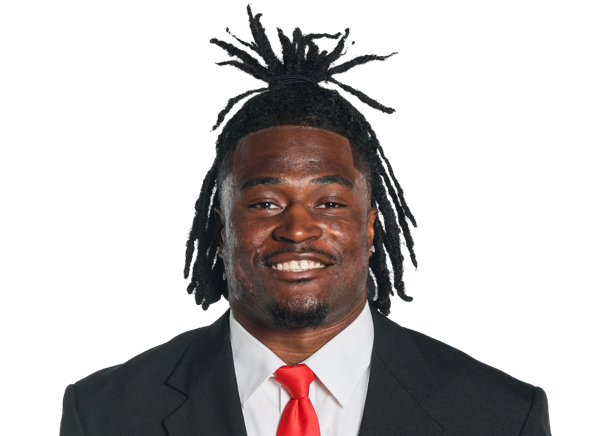
Kaelon Black's offensive snap share has moved from roughly 16% earlier this season to approximately 34% since Week 6, and the touch volume behind that number has been just as telling. He has handled at least nine touches in four consecutive games, and in the last three games through Week 10 he recorded at least 11 carries in every one of them. In the Week 10 win at Dallas, Black played 26 of San Francisco's 65 offensive snaps — 40% — and turned 11 carries and two targets into 53 rushing yards, a touchdown and 13 receiving yards, an RB15 finish that was his first top-20 result of the season.
That is a real and sustained shift, not a one-game blip tied to a blowout score or a single banged-up opponent. But the size of the shift matters less than what it is competing against, and the honest version of this story sits a tier below the loudest version currently circulating on waiver forums.
The Undrafted Back Who Wasn't Supposed to Be Here
Black signed with San Francisco as an undrafted rookie on May 8, 2026. He arrived into a running back room that kept adding bodies all offseason: Patrick Taylor re-signed in March and competed with him directly, and the 49ers then brought in Jermar Jefferson and Jordan Mims in late May, re-signed Sincere McCormick in June after briefly waiving him, and added veteran Khalil Herbert in August. That is five other running backs stacked into the competition behind — and around — an undrafted rookie with no draft pedigree to lean on. Nothing in his arrival suggested a clear path to a real role.
The condition that has changed is the sorting of that competition. Black did not win a starting job outright — nobody was taking that from Christian McCaffrey — but he has clearly separated from Taylor, Jefferson, Mims, McCormick and Herbert as the back San Francisco trusts with the second-most valuable share of touches. The snap-share climb from 16% to 34% is the clearest evidence of that separation. What has not changed is the identity of the back in front of him.
McCaffrey, Shanahan, and the Back of the Line
Christian McCaffrey is not declining, and he is not splitting touches with Black out of necessity. Through nine games this season, McCaffrey had 155 total touches for 950 yards and 13 touchdowns — a lead-back workload and production level that would anchor a fantasy roster on its own. San Francisco has deliberately kept Black involved to preserve McCaffrey's health across a long season, not because McCaffrey's role has eroded. Kyle Shanahan has been explicit about the scheme behind it: "No, I think there's not any runs in particular that only this guy does that that guy doesn't do. It doesn't matter to me which back's in based off of what runs we call. I think they both can do them all." That is a coach describing a managed workload split for his starter, not a quarterback controversy at running back.
Shanahan has also made clear this is not a reluctant arrangement. He said McCaffrey "really respects Kaelon," and described Black as a player who "works at everything," is "very hard on himself," and "approaches each day to get better." Black echoed that dynamic after the Dallas game: "It's been great working with Christian. I'm always picking his brain and seeing what I can learn." The tone from both sides points to a genuine tandem, not a handcuff biding his time for an injury. That distinction matters for how high Black's ceiling realistically sits — and for the rest of the room behind him. Taylor, Jefferson, Mims, McCormick and Herbert are the names Black had to pass to get here, and none of them currently threaten to pull touches back from him; the competition that defined his offseason has effectively been settled in his favor, just not at the top of the depth chart.
Why 34% Snaps Doesn't Mean Top-15
The strongest case against getting excited about Black is structural, and it deserves to be stated plainly rather than waved away. McCaffrey remains the far more valuable player near the goal line: his 13 touchdowns through nine games dwarf Black's two. A snap-share jump from 16% to 34% is a real signal of opportunity, but it has not translated into feature-back volume, and Black's receiving role — two targets in the Dallas game being a representative sample — remains limited. A back playing roughly a third of the snaps behind a healthy, highly efficient starter who is still seeing the ball near the end zone is not a top-15 rest-of-season asset by any conventional measure, no matter how encouraging the trend line looks.
That argument holds up, and it is the correct ceiling-setter here. But it does not erase the value of what has already happened. A player who draws at least nine touches in four straight games and at least 11 carries in three straight is not a speculative add anymore — he is producing a weekly floor independent of what McCaffrey does, which is a different thing from needing McCaffrey to get hurt to matter. Roughly 39% of fantasy managers had rostered Black as of Week 11, and the waiver-wire case for him has rightly been built on standalone touches rather than on hoping for an injury. That is the right frame: modest, real, standalone value, with upside attached to the always-present chance that McCaffrey's workload gets managed even more conservatively as the season wears on.
The Call on Kaelon Black
Treat Black as a weekly flex option in deeper leagues and a priority bench stash everywhere else — not as a top-15 rest-of-season running back, and not as a player you should be trading significant value to acquire. His 34% snap share and his streak of 11-plus carry games are real and worth rostering off waivers if he is still sitting at that roughly 39% ownership mark in your league. But the backfield math is still McCaffrey's math: 13 touchdowns to two, and a bell-cow workload that shows no sign of collapsing. Add Black for the standalone touches and the insurance both, but rank him as an RB3 with flex appeal, and let the McCaffrey injury scenario stay exactly what it is — an upside case, not the baseline projection.