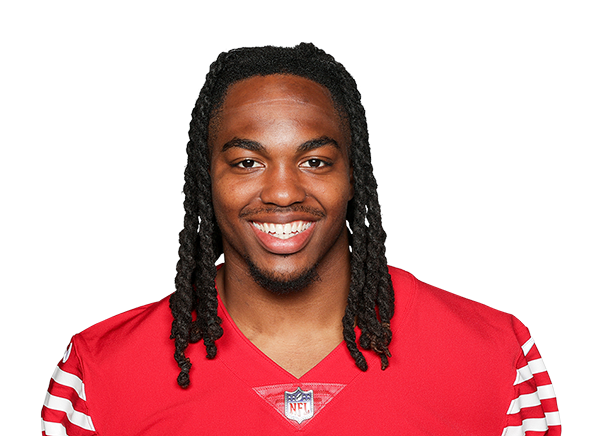
Jordan Mason is currently priced as a speculative asset — ranked around RB41 in dynasty formats and drawing no sustained market momentum — while the fundamental case for him is straightforward: if he secures the lead-back role in Minnesota, that draft price is wrong. The argument is not that Mason is a lock for a top-12 season. It is that the market has so thoroughly discounted the probability of a bell-cow outcome that his current price fails to reflect it. That gap is where the fantasy value lives.
The timing matters. A positive fantasy signal emerged in July 2026 connected to Mason's role, and the dynasty market posted a modest uptick over 30 days. That is early-camp noise from the market, but it points in the right direction. Managers who wait for a full confirmation will pay a higher price. The question is whether the current evidence justifies buying now, before that confirmation arrives.
The Opportunity Is Real and Currently Underpriced
Mason is on Minnesota's roster with his fantasy value explicitly tied to a potentially expanded workload. That framing is significant. When a player's valuation is keyed to opportunity rather than current role confirmation, the market tends to apply a heavy discount — pricing for the floor rather than the midpoint of outcomes. That is exactly what is happening here. Mason sits at RB41 in dynasty rank, which means nearly every productive back in the league is being drafted ahead of him. For a player whose path to relevance runs through a starting job on an NFL offense, that discount is too steep.
The Vikings are a legitimate offensive platform. JJ McCarthy is the confirmed starting quarterback in Minnesota for 2026, and Justin Jefferson remains one of the two best wide receivers in football. That combination puts defenses under enough stress to open running lanes and sustain a ground game. A lead back in that offense touches a full menu of opportunity: early-down carries, goal-line work, and enough play-action context to generate receiving touches. Mason does not need an elite scheme. He needs volume, and the situation is structured to provide it.
The Career Profile Supports a Starter-Level Role
Across four NFL seasons, Mason has accumulated 395 carries for 2,011 yards, 28 catches for 173 yards, and 13 touchdowns. Those are not the numbers of a player who was tried as a starter and found wanting. They are the numbers of a player who was used situationally and still produced. The yards-per-carry efficiency embedded in that 2,011-yard total across 395 attempts is solid enough to support the projection that, given a true bell-cow role, Mason can sustain productivity rather than collapse under the weight of volume.
The 2024 season is the clearest evidence. Mason got off to a strong start in San Francisco before his season ended on injured reserve with a high ankle sprain. That injury was the reason his 2024 opportunity closed. It was not a performance failure. A player who earns a lead role and then loses it to injury — rather than losing it to a competitor outplaying him — carries a different risk profile than a player who was benched. The market often conflates these two situations. Mason's price has been suppressed partly by the injury, but the injury did not reveal a flaw in his game.
The Market Signal Is Quietly Turning Positive
Mason's dynasty value rose by 38 points over the 30 days leading into late July 2026, a one-percent gain in a market that typically moves on confirmed news. That is a small number in isolation, but it is directionally meaningful when paired with the positive fantasy signal that surfaced around the same time. These two data points do not prove a starting role has been confirmed. They do suggest that information is beginning to leak into the market — camp observations, beat-reporter notes, usage patterns in practice — that is nudging valuations upward. The 90-day trend is still negative at minus eleven percent, which means the longer-term suppression remains. That gap between the 30-day uptick and the 90-day suppression is where the inefficiency sits.
The Counter-Argument — and Why It Does Not Close the Case
The honest counter-argument is this: nothing in the available evidence confirms a locked-in starting job. There is no coach quote, no explicit depth-chart announcement, and no camp report that says Jordan Mason is the Vikings' RB1. The entire bull case rests on a projection of volume that may not materialize. If Mason enters the season as a committee back, or if Minnesota adds a competitor before the season starts, the top-20 projection collapses. His career catch total of 28 receptions across four seasons also suggests he is not a three-down back in the modern sense. A team that passes frequently may limit his floor.
That counter-argument is fair, and it is the correct reason to temper the claim. The top-12 finish projected in the original premise is difficult to justify without harder confirmation of a bell-cow role. But the counter-argument does not close the case against drafting Mason — it only argues for calibrating the claim properly. The question is not whether Mason is a certain top-12 back. The question is whether, at his current price of RB41, the market is fairly compensating you for the probability that he becomes a top-20 back. At that price, the answer is no. The upside is real. The cost is minimal. Fantasy drafts reward managers who price probability accurately, not those who wait for certainty.
The Verdict
Jordan Mason is being drafted as a speculative bench piece when the evidence supports a more aggressive price. His career production is the output of a player who handled a starting role and produced at a starter's level until injury intervened. He is on a team with a competent quarterback and the best wide receiver in his conference, which structures the run game favorably. A positive role signal has surfaced in July, and the dynasty market is beginning — slowly — to respond.
The refined claim is this: Mason is a realistic top-20 RB in 2026 redraft formats and is currently priced at least ten to fifteen spots too low, based on the probability of a bell-cow workload in Minnesota. The top-12 outcome is possible but requires confirmed volume that the evidence does not yet guarantee. What the evidence does support is that RB41 is the wrong price for a player with this profile in this situation. Target Mason in the middle rounds of redraft leagues before a depth-chart announcement pushes his price to where it belongs.