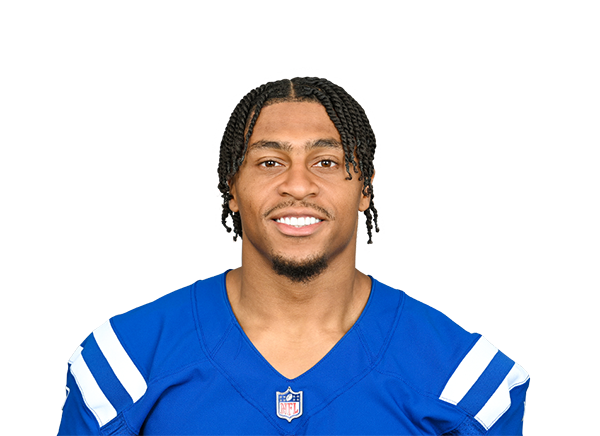
The consensus case against Jonathan Taylor right now is not hard to build, and it does not require cherry-picking. His snap share fell to 68.8 percent against Dallas on November 8, the third straight game at 70 percent or below. He played 44 snaps in that loss, carried 13 times for 46 yards, caught five passes for 18 yards, and lost a fourth-quarter fumble. Across Weeks 8 and 9 combined, he managed just 21 carries for 69 yards. Seth McGowan has started taking real work out of the backfield. Add in trade speculation that followed Taylor right up to the deadline, plus a Colts front office that was openly collecting draft capital and clearing 2027 cap space by trading other veterans, and the read writes itself: Taylor is a declining workhorse on a team that may be selling off its future, and the role that made him a league-winner in prior seasons is shrinking in real time.
That is a fair, evidence-based position. It is also the position already priced into however the market is treating him this week. The question is not whether Taylor's role has changed — it has — but whether it has changed enough to abandon him.
What the Colts' Backfield Looks Like After the Deadline
Start with what actually happened at the deadline: Indianapolis was reported to have considered trade offers for Taylor during the season and retained him anyway. Reports on November 10 and 11 confirmed the Colts kept him rather than moving him for picks, even as they traded other players away. Shane Steichen, still the head coach with Jim Bob Cooter still calling plays, said flatly after the deadline that he was "excited that he's here." That is not the language of a staff planning to bury its lead back.
The competition for touches is real but limited. Seth McGowan, a seventh-round pick in the 2026 draft, is the only verified addition cutting into Taylor's workload, and his post-deadline role still projects Taylor at roughly 70 to 75 percent of offensive snaps — a committee, not a benching. Lincoln Pare and Jordon Vaughn, two undrafted free agents signed last May, remain depth pieces rather than threats. Daniel Jones is still the starting quarterback, the same arrangement that existed before any of this trade noise began, and Tyler Warren remains the offense's primary tight end. Nothing about the surrounding cast changed this offseason in a way that explains the recent dip — no new lead back was imported, no coordinator was fired, and no established pass-catcher arrived to siphon volume. The drop in snaps happened inside an otherwise unchanged offensive structure, which is itself worth examining rather than assuming.
The Touchdown Math the Snap-Share Story Ignores
Through Week 9, Taylor has produced 63 percent of Indianapolis' rushing yardage and eight of the team's 11 rushing touchdowns. That is not a committee back's statistical signature — that is a team still building its ground game around one player even as his per-game snap count fluctuates. A back who is losing his job does not keep scoring more than seven in ten of his team's rushing touchdowns. The gap between his declining snap percentage and his still-dominant share of the scoring and yardage tells a more specific story than "Taylor is getting phased out": it suggests the Colts are managing his workload in a way that preserves him for the moments that matter most for fantasy scoring, even while trimming the early-down reps that pad raw snap counts.
Why Indianapolis Just Paid Him Like a Cornerstone
Context matters here too. Taylor signed a two-year, $44 million extension in August 2026, including $39 million guaranteed, running through 2028. A team does not hand a running back that kind of guaranteed money months before quietly diminishing his role — and the deadline decision to retain him over outside offers reinforces that the extension was not a sunk-cost mistake the front office now regrets. There is no verified depth-chart demotion anywhere in the reporting; Taylor is still described as continuing to play a major role in Indianapolis' offensive game plan. The honest read on the last two games is that they happened inside a stretch where the team was simultaneously fielding trade calls and restructuring its roster around him — turbulence, not a changed depth chart.
Taylor's own comments after the Dallas loss reflect a player aware of the noise but not behaving like someone who has lost his job. "I love repping the horseshoe, but it's out of our control now," he said, adding, "The hay is in the barn. We just play the waiting game now." Asked directly about his future, he said, "I don't know. I'm not sure. I know as much as you." Those are the words of a player caught in the uncertainty of trade season, not one who has been told his touches are being redistributed for the rest of the year.
What Still Has to Break Right for Taylor
None of this erases the risk. Taylor's snap share genuinely declined, from an 89 percent average across Weeks 1 through 3 down to roughly 70 percent over the six games that followed, and McGowan's involvement is trending up, not down. His Week 9 efficiency was poor — 3.5 yards per carry, a lost fumble, no touchdown — and if that becomes the new baseline rather than a bad week inside a chaotic stretch, the touchdown share that has carried his fantasy production will not hold on its own. Indianapolis' deadline-week roster moves, made partly to collect draft capital, also raise a fair question about how competitive the offense stays down the stretch, and fewer scoring opportunities as a team hurt Taylor's touchdown-dependent profile regardless of his individual role. There is also no verified injury report in the available reporting, which means durability cannot be ruled in or out as a factor behind the recent snap dip — it is simply unaddressed, and that absence is itself a reason for some caution rather than certainty.
The Verdict on Taylor Right Now
The version of this claim the evidence supports is narrower than the trade-deadline hype suggested over the summer: Taylor is not a lock for a top-five finish, and pretending his usage "never dropped" ignores a real and measurable decline in snaps. But the team that could have moved him for draft capital chose not to, the coaching staff that calls his plays said it is glad he is still there, and he continues to produce the clear majority of Indianapolis' rushing yardage and touchdowns even in a reduced role. That combination — retained, extended, and still the focal point of the running game even at 70 to 75 percent of snaps — is the profile of a buy-low RB1, not a player to bench or trade away because of two rough weeks inside an unusually chaotic month. Treat the recent efficiency dip as the buying opportunity it looks like, and expect the touchdown variance to normalize before it disappears.