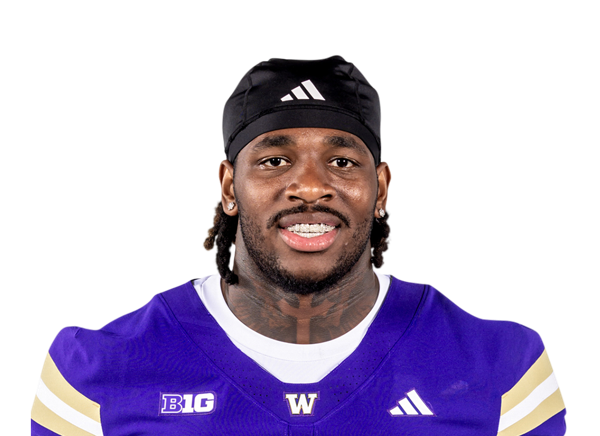
Jonah Coleman is not Denver's lead back. He is, as of this week, a healthy third option in a backfield that just got one body thinner. The fantasy consequence of that is real but modest: a path to 11-plus touches a week if the role keeps expanding, and priority-stash status in 12-team leagues right now, rather than a locked-in starting job. That distinction matters, because the version of this story that gets repeated on waiver wires everywhere overstates what actually happened in Denver over the last two weeks.
What actually happened is this: Coleman missed four games with an ankle injury, came back for Week 7, and the same week Denver placed another running back on injured reserve. That is a door opening, not a role handed over. The question for any manager scanning the wire is whether the door opens far enough to matter before the season ends, and the honest answer right now is maybe.
A Three-Man Denver Backfield After Badie's Injury
Denver's backfield picture has changed in two distinct ways since last season, and both cut in Coleman's direction without yet making him the headline act. First, the coaching staff: Sean Payton remains head coach, but Davis Webb replaced Joe Lombardi as offensive coordinator and took over play-calling duties after serving as Denver's pass-game coordinator and quarterbacks coach in 2025. A new play-caller with a passing-game background is a variable worth watching for how touches get distributed, though nothing in the available reporting confirms Webb has specifically favored Coleman over the other backs. Bo Nix remains the starting quarterback, which means the scheme's run-game identity built around his legs is unchanged from last year — that stability actually matters more for Coleman than any coordinator swap, because it keeps the overall run-game volume in the offense roughly where it was.
Second, and more immediately relevant, is the depth chart itself. Denver's unofficial Week 7 chart listed J.K. Dobbins as the RB1 and R.J. Harvey as the RB2, with Coleman third. Dobbins has been the primary between-the-tackles runner, and Harvey has handled passing-down work — a division of labor that predates Coleman's return and did not immediately dissolve when he came back. Then, on October 24, Denver placed Tyler Badie on injured reserve with a thumb injury, trimming the group from four relevant runners to three. That subtraction is the actual news here. It does not make Coleman a starter. It does remove one body from the rotation math, and in a backfield already carrying three backs, removing a fourth name from the competition for scraps of playing time is not nothing.
What Week 2 Showed Before the Injury
Before the ankle injury, Coleman had already shown Denver something. In Week 2 against Jacksonville, he turned 10 carries into 39 rushing yards, added three receptions for 19 yards, and scored a rushing touchdown — 13 total touches for 58 scrimmage yards. That is not an explosive workload, but it is a complete one: a back who can handle inside carries and catch passes out of the backfield in the same game. Through Denver's first six games, Coleman had logged 28 offensive snaps and nine special-teams snaps across the two games he played before going down, which tells you the team was already willing to use him on offense rather than parking him as a special-teams-only piece.
The reason this matters now is that it establishes Coleman had functional two-way value before the injury interrupted it. A back who shows receiving usefulness in limited action is a different proposition than one who has only ever carried the ball between the tackles — the receiving work is usually what turns a committee back into a weekly FLEX option, because it adds a touch floor that doesn't depend on winning the early-down job outright.
Week 7 Snapshot: Return Without a Role Change
Coleman's actual return game, against Arizona in Week 7, is the clearest evidence available for what his role looks like today. He rushed nine times for 54 yards and caught two passes for 15 yards — 11 touches, 69 scrimmage yards, no touchdown. Those are solid per-touch numbers for a player working his way back from a four-game absence. They are not the touch total of a lead back. Dobbins was still listed first on the depth chart that same week, and the Week 7 workload came in a three-man rotation that Coleman complicated rather than replaced. Reporting following that game framed him as a player who should be added in 12-team leagues, while also flagging that his workload going forward was uncertain — which is the correct way to describe a player with upside and no guaranteed role.
The Case Against Betting on Coleman Now
The strongest objection to adding Coleman is simple and well-supported: the depth chart has not changed in his favor. Dobbins remains the early-down starter. Harvey still owns a defined passing-down role that overlaps with the exact skill — receiving work — that makes Coleman interesting in the first place. Coleman's own best game since returning produced 11 touches, not the 15-plus that would signal a true workload shift. An ankle injury that cost him a month is also not nothing; the same issue that sidelined him once can resurface, and Denver has shown no urgency to hand him a bigger share before trusting his conditioning over a larger sample.
That objection is fair, and it is why the original framing of Coleman as an emerging lead back and top-15 finisher does not hold up against the evidence. But it also does not erase what changed this week. Badie's injury is a real subtraction from the competition for touches, even if it does not touch Dobbins or Harvey directly. And Coleman's per-touch efficiency in both his available games — 58 yards on 13 touches in Week 2, 69 yards on 11 touches in Week 7 — suggests a player capable of doing more with an expanded role if Denver chooses to give him one. The honest read is that Coleman is a bet on a role that could grow, not a confirmation that it already has.
What To Do With Coleman This Week
Add Coleman in any league where he is available. The downside of rostering him is minimal bench-spot opportunity cost; the upside is that Denver's backfield now has one fewer competitor for touches, and Coleman has already shown he can produce when given work. He is not a confident weekly starter yet, and managers should not bench an established FLEX option to force him into a lineup off one 11-touch game. The better plan is to monitor Denver's next couple of snap counts closely — if Coleman's offensive-snap share starts climbing past what Harvey is getting on passing downs, that is the signal this becomes a real role rather than a speculative one. Until then, treat him as a stash with a real, evidence-based path to FLEX value, not as a settled RB2.