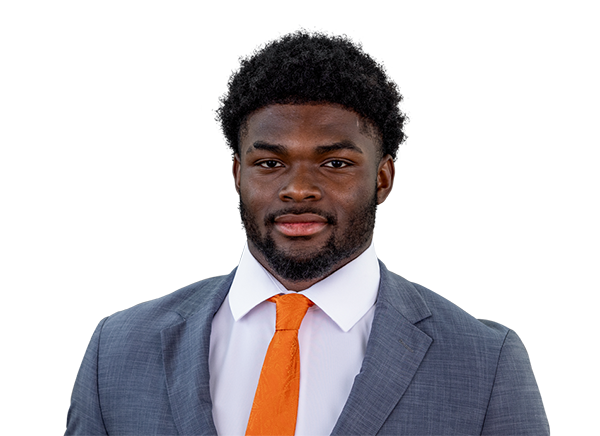
The case against chasing Harold Fannin Jr. this year is not that he lacks talent. It is that the market has already done the work. He is being drafted around TE6, with an average draft position in the mid-60s overall, which is not a value price for a tight end who missed most of the offseason recovering from surgery and now shares a position room with two new veteran-caliber bodies and two rookies. The skeptical read says the easy money on Fannin was made in 2025, when he was a rookie nobody drafted and quietly led the Browns in catches. Buying him now, at TE6 or TE7, means paying close to sticker price for a player whose situation got more crowded, not less, and whose quarterback situation is unresolved enough that some previews are calling his ADP "risk baked in."
That is a fair worry, not a lazy one. A player who is already being drafted as a midrange TE1 has to clear a higher bar to be worth writing about, because he is no longer a hidden asset. The question is not whether Fannin is good. It is whether the specific things being priced into that TE6 tag actually hold up against what changed in his favor this offseason.
What Cleveland's Tight End Room Actually Looks Like Now
David Njoku, the veteran who had been the presumptive lead tight end target-earner in Cleveland, left as a free agent this offseason, and that removes a real competitor for targets rather than a marginal one. In his place, the Browns added tight end Jack Stoll on a one-year deal, drafted rookies Joe Royer and Carsen Ryan, and re-signed Blake Whiteheart. On paper that reads as a crowded room. In practice, none of those additions profile as a receiving threat at Fannin's level — Stoll competes for inline and short-area work, and the rookies are competing for rotational snaps behind him, not above him. Deshaun Watson remains the presumptive starting quarterback into 2026, and while our own board grades him as a modest QB34, that same board lists Fannin as the clear depth-chart TE1 in an offense that, by its own beat reporting, is thin on dependable receiver depth. A quarterback without many established outside options tends to lean on his most reliable underneath weapon, and in Cleveland that weapon is the tight end, not a wide receiver room that currently has nobody rated on our board at all.
The Target Share Njoku Left Behind
Fannin's rookie-year numbers are not just impressive in isolation, they are relevant to what he inherits this year. He led the Browns in receptions (72), targets (107), and receiving touchdowns (six) last season, and did it with a 20.5 percent target share while Njoku was still on the roster and still absorbing a piece of that passing game. That share was earned in competition with a veteran, not in an empty room. Now that veteran is gone, and the players who replaced him on the depth chart are not the kind of names that typically cut into a lead tight end's share of the offense. The realistic outcome is not that Fannin's workload shrinks because the room got deeper in bodies — it is that a target pool Njoku used to draw from now has nowhere else obvious to go.
Monken's Own Words on the Depth Chart
Play-caller Todd Monken has already signaled where his confidence sits at the position. After a joint practice, Monken said Fannin and Whiteheart have been standouts and that Carsen Ryan has come a long way, but the framing matters: Fannin was named first, alongside praise for his development, not as a player fighting to hold his job. Beat reporting has also described Whiteheart, not Fannin, as the clear No. 2 at the position, which functionally settles the pecking order the market claims to be worried about. A tight end room can add three new names without any of them threatening the top spot, and that appears to be exactly the case here.
The Groin Surgery Is Already Priced In, Not a New Risk
Fannin underwent surgery for a Grade 2 groin injury suffered late in his rookie season and missed most of the offseason program as a result. That is a real durability data point and it deserves weight. But it is not new information the market hasn't seen — his current TE6/TE7 ADP already reflects a player who missed OTAs and minicamp. What matters going forward is that he was cleared roughly two weeks before camp and has been full-go since, with camp reporting describing him building chemistry in the new offense and scoring touchdowns in practice reps, including one from Shedeur Sanders. A recovery that clears in time for camp and produces in-camp production is closer to confirmation of health than a lingering concern.
What Still Has to Break His Way
The honest risk is not the depth chart, it is the passing offense around him. Watson's own grade on our board reflects real efficiency questions, and a wide receiver room with no players rated highly enough to make our board is a genuine constraint — if Cleveland's offense struggles to move the ball consistently, tight end targets alone will not be enough to push Fannin into a top-tier finish, regardless of his share of them. FantasyPros consensus currently projects him at roughly 80 catches, 817 yards, and 5.4 touchdowns, which is solid but not spectacular, and it assumes touchdown efficiency similar to last year's six scores on 107 targets. If that touchdown rate regresses in a shakier offense, the counting stats alone won't be enough to clear a top-8 finish. The Grade 2 groin injury also remains the kind of soft-tissue issue that can recur under a full workload, and any missed time would cap the outcome regardless of role.
Where That Leaves the Claim
The version of the claim that survives the evidence is narrower than "hidden top-12 value," because the market has already found him. What the dossier supports is that Fannin's current TE6/TE7 price is closer to a floor than a ceiling. Njoku's exit hands him a target share with no obvious taker among the new arrivals, Monken's own comments and the pecking order behind Whiteheart confirm the job is settled, and his recovery timeline lines up with a full training camp rather than a lingering absence. Draft him where the market has him, not as a discount, but treat any slide past his current ADP as the actual buying window — and expect a finish in the top eight at the position, with top-six upside if Cleveland's touchdown production holds.