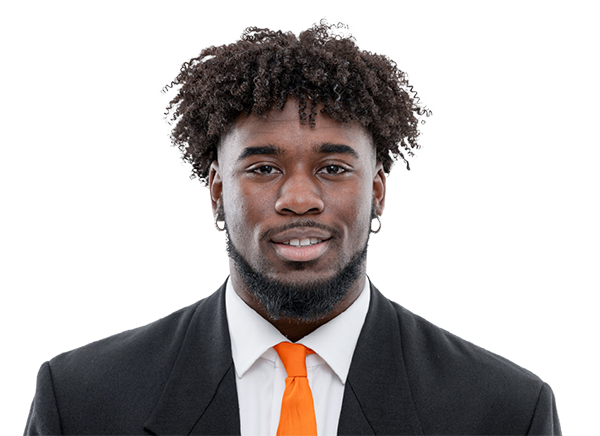
Dylan Sampson's role in Cleveland has changed meaningfully over the last two games, and fantasy managers scanning season-long stat lines are missing it. Since returning from injured reserve, Sampson has become the Browns' preferred receiving back, posting nine catches on 11 targets for 94 yards across Weeks 7 and 8 while his snap share rose from 46% to 56%. That is a real trend. It is not, however, evidence that he has passed Quinshon Judkins as Cleveland's lead back, and it is not yet enough volume to call him a top-20 running back. The honest claim is narrower and still useful: Sampson is a legitimate PPR flex with weekly RB2 upside in game scripts where Cleveland trails, riding a receiving role that has outpaced his market price.
That distinction matters right now because Sampson is being drafted and rostered like a forgotten complementary piece, not like a back who just posted a 12.9-point PPR week on a single carry. The gap between his actual role and his market treatment is the entire case for adding him this week.
Judkins, McLaughlin, and Where Sampson Sits on the Depth Chart
Cleveland selected Quinshon Judkins in the 2026 NFL Draft, and he is listed as the Browns' starting running back, with Sampson behind him. That positioning is not a formality. Judkins has carried the early-down and rushing workload all season and still led the Week 8 backfield in carries even as Sampson's snaps rose. Jaleel McLaughlin was promoted from Cleveland's practice squad to the active roster on September 15, 2026, directly in response to Sampson's knee injury, and he remains a complementary-snaps competitor in the room. Raheim Sanders is also on the roster as another running-back option, though the timing of his arrival isn't established. None of this adds up to Sampson taking over the backfield. It adds up to a clearly defined split: Judkins owns early downs and rushing volume, Sampson owns passing-down work, and McLaughlin and Sanders compete for whatever is left over.
Deshaun Watson is listed as Cleveland's expected starting quarterback, with Shedeur Sanders behind him on the depth chart. The available reporting does not establish a new offensive coordinator or head coach for 2026, so there is no confirmed scheme change to credit or blame for Sampson's shifting role. What has changed is availability and performance, not the coaching staff calling plays.
The Post-IR Snap Swing
Sampson missed time in 2026 with a knee injury suffered in the season opener, landed on injured reserve on September 15, and was activated October 24. His first game back, Week 7 at Tennessee, saw him play 46% of Cleveland's snaps on six carries and three targets, producing 45 rushing yards and 32 receiving yards for 10.7 PPR points. One week later, in the Week 8 loss to Pittsburgh, his snap share jumped to 56% while Judkins' fell from 53% to 39%. Sampson played 11 more snaps than Judkins that game and ran 29 routes to Judkins' seven. That kind of route-running gap, inside the same offense and same game, is the clearest signal available that Cleveland's passing-down plan runs through Sampson now, not Judkins.
Targets Over Touches: The Role Cleveland Actually Trusts Him With
The surface-level touch count undersells what happened in Week 8. Sampson carried the ball just once, for seven yards, but caught six of eight targets for 62 yards. Across his two games since returning, he has nine receptions on 11 targets for 94 yards, against only seven carries for 52 rushing yards on the ground. That is not a committee back splitting work evenly; it is a specialist role, and in PPR scoring a receiving specialist with an eight-target game carries real weekly ceiling even without carries to match. His target share sat at 14% through his first two 2026 games, averaging 5.5 targets per contest, which puts him in flex-relevant territory in a league where receiving work is the scarcer resource for most backfield committees.
The Gap Between His Price and His Production
A Week 8 market snapshot had Sampson's ADP at 187, behind Tyler Allgeier. The same week, his market-based projection was 6.4 fantasy points. He scored 12.9. A single game doesn't rewrite a draft board, but it does suggest the market has not caught up to what his route count and target share were saying in real time. If that gap persists into Week 9 and beyond, Sampson is being treated as waiver-wire filler while performing like a usable weekly piece in the right matchup.
The Honest Objection: It's Two Games and a Trailing Game Script
The strongest case against buying into this is that the sample is small and the context is specific. Sampson's target surge spans exactly two games, both of which came with Cleveland either trailing or in a competitive passing script against Pittsburgh. Judkins still owned the rushing workload in both games, and his own target shares over that stretch were just 3% and 5%, meaning the receiving work Sampson is getting isn't being pulled away from a back who was using it anyway. If Cleveland builds leads and leans on the ground game, Judkins' early-down role could easily compress Sampson's snaps back toward the 46% level he showed in Week 7, not sustain the 56% from Week 8.
That objection is fair, and it is why the top-20 framing in the original premise overstates the case. But it doesn't erase the evidence. A back who runs 29 routes in a game, regardless of why, has demonstrated that the coaching staff trusts him on the field during passing situations. Game scripts that favor the pass are not rare events for a team that has also needed its backup quarterback on the depth chart; they are a plausible recurring condition, not an outlier. The data supports a bet on the receiving role recurring more than it supports dismissing it as a one-off.
What to Do With Sampson Right Now
Treat Sampson as a streaming flex candidate in PPR and full-PPR formats, prioritized in weeks where Cleveland is an underdog or projected to be playing from behind, since that is the exact context that produced his two best performances. He is not a start in standard-scoring leagues built around rushing yards and touchdowns, because Judkins still controls that part of the game. He is also not a buy in dynasty or redraft trades at a price that assumes he passes Judkins outright; the depth chart and the carry totals don't support that outcome yet. The actionable move is tactical: grab him off waivers where available, plug him in for PPR flex spots against pass-funnel defenses or in likely trailing scripts, and reassess if Cleveland starts winning consistently and Judkins' snap share climbs back toward its Week 7 level.