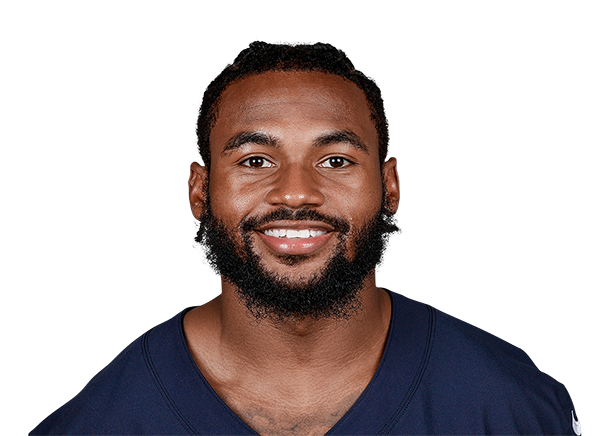
The consensus on D'Andre Swift is a shrug wrapped in a draft pick. He goes in the fifth round, gets filed as a low-end RB2, and most drafters move on without much debate. Rotowire captured the mood exactly: a player with a slightly better statistical projection attached to a murkier role, summed up as "Fine pick, exhausting hold." The logic behind that shrug is not lazy. Chicago added a rookie back this offseason, PFF has already flagged rising competition for snaps as a drag on Swift's ceiling, and a back who needs a heavy carry total to pay off his price is inherently more fragile than a true bell-cow. If you believe Chicago is building a genuine timeshare, fading Swift to the RB20-22 range is a defensible, evidence-based call.
The Monangai Arrival and Chicago's New Backfield Coach
Here is what the market is actually pricing in. Kyle Monangai arrived as Chicago's seventh-round pick in the 2026 draft and is the clearest new competitor for Swift's touches, described in coverage as the complementary or early-down piece behind him. No Bears backfield departure is confirmed this offseason, so there is no vacancy pulling extra work toward Swift either — this is a two-man competition, not an open job. Caleb Williams returns as the starting quarterback, unchanged from last season, still throwing to Rome Odunze at WR1, Luther Burden III at WR2, and Colston Loveland at TE1. The one real structural change sits in the coaching staff: Eric Studesville takes over as running backs coach, replacing Eric Bieniemy, who left for Kansas City. A new position coach installing his own rotation is exactly the kind of variable that makes drafters nervous about workload certainty, and it is a fair reason for caution. Swift still sits atop Chicago's depth chart ahead of Monangai, Roschon Johnson, and Brittain Brown, but the market has decided that depth-chart position alone is not worth paying up for.
The Passing-Down Role Monangai Doesn't Take From Him
The clearest reason the fifth-round price undersells Swift is the shape of the committee itself. SI's preview described Swift as "the explosive perimeter runner and primary passing-down option" while Monangai handles "early-down heavy lifting." That is a favorable split for fantasy scoring. Early-down carries in a run-heavy split are volatile and touchdown-dependent; passing-down work is a steadier source of points because it survives negative game scripts and produces catches almost every week. Swift's 2025 line backs this up directly: 48 targets, 34 receptions, and 299 receiving yards on top of 223 carries and 1,087 rushing yards. A back who keeps the passing downs in a Caleb Williams offense has a scoring floor that a straight timeshare number does not capture.
The Efficiency Trend Already Points the Right Direction
The second overlooked piece is that Swift's per-game production has been climbing, not fading. PFF has him going from 21st among running backs in 2024 at 12.6 fantasy points per game to 17th in 2025 at 14.3 points per game. That improvement occurred even as PFF itself flagged rising competition for snaps at the position — the same competition that is now entering its first full season on the field together. A back improving his per-game output while absorbing more competition, rather than because of an empty backfield, is a stronger signal than the raw finish suggests.
The Price Barely Separates Him From Backups Elsewhere
The clearest sign the market hasn't fully priced Swift's role is who he's being drafted next to. Rotowire had Swift going at 51.2 overall in half-PPR drafts, with David Montgomery going only slightly earlier at 48.9. Montgomery is not Chicago's starter; Swift is. A running back who is the confirmed RB1 on his own depth chart, with the passing-down role attached, going in the same three-pick window as a back without that same standing on his own team suggests the market is pricing Swift more on committee-risk narrative than on the actual role he holds today.
The Monangai Split Is the One Risk That Still Matters
None of this erases the real risk, and it deserves to be stated plainly rather than waved off. PFF's own framing is that added competition from Monangai already capped Swift's 2025 finish at 17th despite the efficiency gain — if that dynamic deepens rather than stabilizes, Swift stays a low-end RB2 rather than climbing into the top 12. SI's own top-12 path requires Swift to push past roughly 220 carries, hold onto his receiving work, and add touchdowns, not merely repeat last year's role. A new running backs coach installing an unfamiliar rotation adds real uncertainty to whether that volume holds. And the dossier includes no fresh August injury report on Swift, so volume volatility remains an unquantified but real threat to a back whose value depends on touches rather than pure explosiveness. If Monangai's early-down role expands into a genuine 50-50 split, this argument collapses and the market's price turns out to have been right.
“The explosive perimeter runner and primary passing-down option.”
— SI
What Swift's Role Has Earned at This Price
The evidence supports a narrower but sturdier claim than a simple outscoring bet against teammates who aren't actually ranked ahead of him. Swift is Chicago's clear depth-chart RB1, holds the passing-down role that produces a stable weekly floor, and has been trending upward in per-game efficiency even as competition for his job increased. The fifth-round price treats him like a coin-flip committee back rather than a passing-down starter on the rise. The residual risk is real — a deeper Monangai role or a workload that stalls below 220 carries would cap him as a low-end RB2 — but the current price already assumes that outcome. Draft him where he's going in the fifth round, not earlier, and treat any earlier run on him as confirmation the market is starting to catch up.