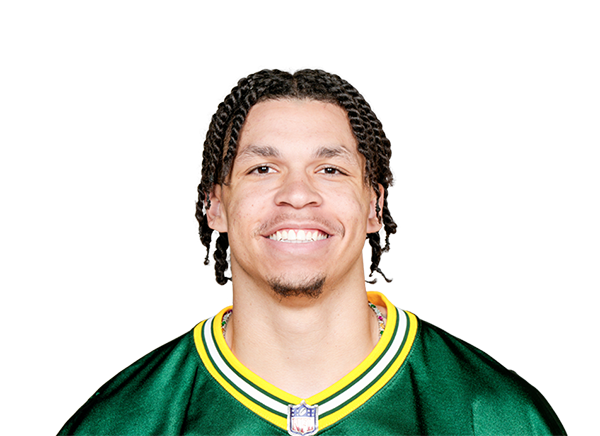
The skeptical case against chasing Christian Watson writes itself, and it deserves to be stated plainly before anything else. Watson has spent his career as a big-play specialist, not a target hog. Across his time in Green Bay he has racked up touchdowns at a rate that outpaces his target volume, which is precisely the profile fantasy analysts warn against trusting for weekly, sustainable production. A six-catch, 147-yard, two-touchdown outing is the kind of week that inflates a stock price without changing the underlying business. The market had already priced Watson as a mid-round flier before this season started, sitting around pick 58 overall in draft markets, which tells you the wider fantasy community viewed him as boom-or-bust depth rather than a foundational piece. One huge game and one injury to a teammate does not erase years of evidence that his production comes in spikes, not steady flows.
That skepticism is not lazy. It is the correct starting point for any player whose ceiling has always outrun his floor. The question is not whether Watson is capable of a monster week. It is whether the change in his role is real enough, and durable enough, to make him a weekly starter rather than a name to remember for one bye-week fill-in.
What Green Bay's Offseason Turnover Actually Changed
To understand what the consensus view is pricing in, start with the receiver room as it exists today, not as it existed a year ago. Green Bay drafted Matthew Golden in 2026, and he is the primary new competitor for snaps and targets at wide receiver. The team also added Skyy Moore and J. Michael Sturdivant to the roster, though neither profiles as an established threat ahead of Golden or Watson. On the departure side, Romeo Doubs and Dontayvion Wicks both left the Packers this offseason, and that matters more than the arrivals do. Doubs and Wicks were routes-run, target-share contributors, and their exit opens real volume in an offense that has not replaced them with anyone more proven than the players already on the roster.
None of this happened in a vacuum. Jordan Love remains Green Bay's starting quarterback, and Matt LaFleur remains the head coach and primary play-caller, so the passing offense Watson plays in is structurally the same one that already knew how to get him the ball on vertical routes and play-action shots. The skill-position weapons around Love changed at the margins; the system that decides who gets targeted did not. That continuity is exactly why the Packers signed Watson to a four-year extension in June, and why the team's initial 2026 depth chart already listed him as the top receiver before Jayden Reed's injury forced the question. Tucker Kraft remains the starting tight end and Josh Jacobs the lead back, and both will absorb some of the passing-game volume that opens up, but neither operates as an outside receiver competing directly for Watson's route tree.
Why Reed's Absence Leaves No Obvious Alpha Besides Watson
The injury itself is the pivot point. Reed was carted off against the Jets with a neck injury and ruled out, with LaFleur saying afterward that Reed had movement in all extremities and would be held overnight for evaluation. Beat coverage in the immediate aftermath stated flatly that Watson would clearly lead the way for Green Bay with Reed sidelined. That is not a marginal role bump. Reed was the No. 3 receiver on the depth chart but functioned as a primary route-runner in the passing game, and his absence removes the one player most likely to siphon early-down and slot targets away from Watson. Golden is the more direct threat to Watson's target share long-term, but he is a rookie-year contributor still working into the rotation, not an established target earner. With Reed out, Watson is the cleanest answer to the question of who is Green Bay's No. 1 target earner, and that answer is confirmed by beat reporting, not inferred from box scores alone.
The Usage Numbers Already Back the Role Change
Skeptics are right that touchdowns lie. Snap share and target rate do not, at least not in the same way. In Week 1, before Reed's injury even entered the picture, Watson posted a 75 percent snap share with an elite target rate for a wide receiver, which is the kind of underlying signal that predicts recurring production rather than a one-week accident. Layer the Week 2 injury to Reed on top of that snap share, and the picture becomes a receiver who was already trending toward more playing time even before the No. 3 receiver went down. Watson's own reaction to the injury, saying he was praying everything went well and had heard positive news from the hospital, is a small detail, but it reflects a player who was on the field and plugged into that game plan, not a name climbing boards from the outside.
What Still Has to Break Watson's Way
The honest version of this argument has to admit what could still go wrong. Reed's absence is the entire premise. If he returns healthy in a few weeks, the target math reverts, and Watson goes back to sharing the room with a legitimate No. 3 option. Golden is also not standing still; if Green Bay's coaching staff decides to feed him volume as he develops, some of the targets that would otherwise flow to Watson get redirected before they ever reach him. And the deepest risk is the one baked into Watson's career to date: 24 receiving touchdowns across 49 games in Green Bay is a spike-play rate that has never been matched by target-volume consistency. A top-15 rest-of-season finish at wide receiver is normally built on steady week-to-week target floors, and Watson has not shown that floor over a full season, even in stretches when he was healthy and playing significant snaps. Betting on him to sustain elite scoring efficiency for months, rather than a few weeks, is the part of this claim that carries real uncertainty.
That risk is real enough that a full-season top-15 guarantee is not the claim the evidence supports. What the evidence does support is a clear, immediate role change with a plausible path to weeks of WR2-caliber production for as long as Reed is out.
The Claim Worth Acting On
Put the pieces together and the picture is a receiver whose target competition thinned at exactly the moment his own usage was already trending up. Doubs and Wicks are gone. Reed is out with a real injury, not a minor tweak. Golden is still a developing rookie-year piece rather than an established target earner. Love and LaFleur are running the same passing game that already trusted Watson with a 75 percent snap share and an elite target rate in Week 1. That combination does not guarantee a top-15 finish across the full season, but it does mean Watson is a legitimate flex-to-WR2 start for as long as Reed's absence continues, with spike-week upside that most waiver-wire options simply do not offer. Add him now, start him with confidence while Reed is out, and re-evaluate the moment Green Bay's receiver room gets healthy again.