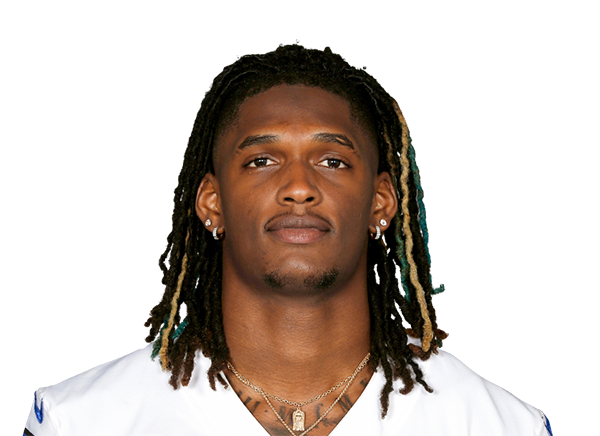
The case for CeeDee Lamb as a top-five wide receiver in 2026 is not hard to make, and it deserves to be stated plainly before it gets picked apart. Through four games this season, Lamb posted 498 receiving yards, the most in Cowboys history through that point. He strung together more than 100 receiving yards in three consecutive games, including a 189-yard outburst against Houston. He is the unquestioned No. 1 receiver in a Dallas passing game that funnels volume his way, and nothing about his role on paper has changed. For a fan base that watched him finish as a top-five wide receiver in recent memory, this looks like confirmation, not surprise.
That view is reasonable. It is also, on the evidence available right now, wrong about where this season ends.
What the Franchise-Record Pace Is Actually Pricing In
The top-five expectation is a bet on continuity: same quarterback, same play-caller, same target competition, same role. All of that is technically true. Dak Prescott remains the starting quarterback, with no offseason change at the position. Brian Schottenheimer remains the offensive play-caller, the same coordinator Lamb has worked with since 2022. George Pickens is still on the roster as the No. 2 receiver, now playing on a franchise tag Dallas applied in early 2026, which means he is not a short-term rental about to leave. Jake Ferguson remains the starting tight end, and Javonte Williams is the lead back, both of them drawing underneath and checkdown volume that competes with Lamb for the same finite number of pass attempts. No major arrival or departure at receiver materially changed the target pool. Anthony Smith, a seventh-round pick, projects as depth. Parris Campbell's retirement and Romello Brinson's release trimmed the bottom of the depth chart, not Lamb's target share.
In other words, the bull case is not built on a new weapon, a coaching upgrade, or a vacated role. It is built almost entirely on four games of production inside an offense that looks the same as it did in 2025. That distinction matters, because 2025 did not produce a top-five outcome from this exact configuration.
The 2025 Floor Sitting Underneath This Streak
Lamb played 14 games in 2025 and finished with 75 receptions on 117 targets for 1,077 yards and three touchdowns. That is 200.9 PPR points, a 14.3 points-per-game average, and a WR22 finish. His target volume was healthy at 8.4 per game, but his catch rate sat at 64 percent, and he turned only 17 red-zone looks into touchdowns at a rate that produced just three scores. That season happened with Prescott at quarterback and Schottenheimer calling plays, the same two conditions in place right now. A four-game hot streak does not erase a 14-game sample generated under identical circumstances. If anything, the burden of proof runs the other way: Lamb needs to show the 2026 surge is a structural shift in usage, not a hot stretch inside an offense whose season-long results last year did not support a top-five finish.
A Quad Bruise and a Snap Count That Fell Off a Cliff
The injury detail is where the sustainability question gets concrete. Lamb had averaged at least 70 percent of Dallas's offensive snaps in every game since Week 18 of the prior season, a workload consistent with a true focal-point receiver. Against Tampa Bay on October 8, that number collapsed to 34 offensive snaps, and he finished the game with two catches for nine yards after re-aggravating a thigh issue he had already been dealing with.
“He's dealing with a quad injury. My understanding is it is a quad bruise, not considered to be serious.”
— Ian Rapoport
“So essentially got hit in the same spot in his quad and was not able to continue playing.”
— Ian Rapoport
Not serious is the operative qualifier, not a clean bill of health. A receiver who has already taken two hits to the same thigh in close succession carries real in-season re-aggravation risk, and a 34-snap outing is the kind of data point that a hot-streak narrative tends to ignore until it repeats. A top-five wide receiver finish requires full-time snaps across a full season. Dallas has already shown it will pull him down in volume when the injury flares, regardless of how the yardage totals looked three weeks earlier.
What Would Still Have to Break Lamb's Way
The honest counter to this case is that Lamb's role has not been demoted, his talent has not declined, and the quad injury was specifically described as not serious. He still set a franchise receiving record through four games, which is not a fluke stat line, it reflects real target command inside Schottenheimer's offense. If the thigh issue resolves cleanly and Lamb returns to the 70-plus percent snap share he carried into this season, there is a path where he sustains enough volume to finish closer to where his early pace suggested. That is a legitimate scenario, and it is the one the top-five consensus is implicitly betting will happen. The residual risk the bulls are accepting is that soft-tissue injuries to the same muscle group frequently recur within a season, and a receiver who has already been pulled to 34 snaps once can be pulled there again.
The Claim This Evidence Actually Supports
Lamb is not a bust and this is not a sell-everything call. He remains Dallas's clear No. 1 target, ahead of Pickens on the depth chart, in the same system that has featured him for four seasons. But the top-five expectation is pricing in a four-game sample over a 14-game track record that produced WR22 last year under the same quarterback and play-caller, and it is pricing in full health after a quad injury that already cost him a full game's worth of usage in a single afternoon. The more defensible forecast is a strong WR2 season with real weekly upside, landing outside the top five at year's end once the per-game average reverts toward last season's baseline and the thigh issue is managed conservatively. Treat him as a confident WR2 in lineup construction, not a locked-in top-five anchor, and build in a contingency plan around Pickens if Dallas continues to be cautious with Lamb's snap count.