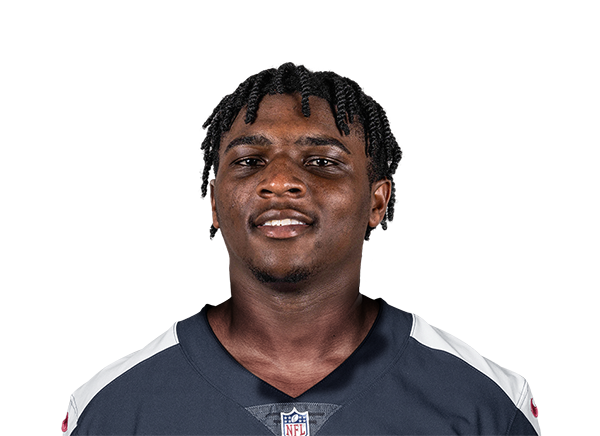
Cam Ward is being talked about like a league-winning streamer and priced like an afterthought. One midseason ranking had him 31st among quarterbacks, down from 25th just weeks earlier. That is the valuation of a player nobody trusts. It sits awkwardly next to a Week 8 line against Cincinnati that looked like a different quarterback entirely: 26 of 40 for 304 yards, two touchdowns, no interceptions, and a career-high 41 rushing yards.
The gap between that price and that performance is the entire question this week. Ward is not a hidden top-10 asset being slept on across a soft two-week stretch. The evidence supports something narrower and more useful: he is a legitimate one-week streaming play against Dallas, in an offense that just showed its ceiling, attached to a following matchup that undercuts any claim of sustained value. Treating him as a two-week must-start overstates what the dossier actually shows.
Who Else Touches the Ball in Nashville
Brian Daboll calls the plays, and the stated plan is tempo. Tennessee ran no-huddle or up-tempo calls on 18 of its first 23 snaps against Cincinnati in Week 8, the same game that produced Ward's best outing of the year. That is a scheme change worth taking seriously, but it is also one game of evidence, not an established baseline.
The weapons around him are thin at the top. Wan'Dale Robinson is the depth chart's WR1, but he ranks just WR40 on our board, which tells you Tennessee does not have a true alpha target forcing coverage away from the rest of the group. Carnell Tate, the rookie, sits at WR7 on the depth chart and WR25 on our board — meaning his role right now is secondary at best, not a reliable second read that would raise Ward's weekly target efficiency. Tony Pollard is the clear lead back (RB1 on the depth chart) but ranks just RB27 overall, so there is no dominant ground-game complement forcing defenses to respect play-action. Gunnar Helm, a second-year tight end, rounds out the passing-game picture at TE30. None of this is a unit built to mask an inconsistent quarterback; it is a unit that needs Ward's own improvement to be the story.
The front office's behavior around the trade deadline reinforces that framing. Trading safety Amani Hooker and defensive tackle Jeffery Simmons has been read as the organization prioritizing Ward's long-term evaluation over short-term roster construction. That is a franchise betting on the quarterback, not a quarterback propped up by a stacked supporting cast.
The Daboll Tempo Package Against Dallas's Leaky Secondary
The strongest argument for starting Ward this week is matchup-specific. Dallas was allowing the fourth-most fantasy points to quarterbacks in the sample cited by one fantasy analysis, 19.1 per game. That is a defense built for exactly the kind of up-tempo, rhythm-passing approach Daboll just unveiled. Ward himself has said he approves of the quickened pace because it helps the offense find rhythm faster, and general manager Mike Borgonzi reportedly views the Cincinnati performance as representative of what Tennessee sees from Ward in practice, not as a fluke. If that evaluation is accurate, the conditions that produced 304 yards and two touchdowns against Cincinnati are schematic, not one-off, and Dallas is a defense built to let that repeat.
The Rushing Floor Nobody Is Pricing In
The second case for paying up, even partially, is the rushing production. Ward's career-high 41 rushing yards in Week 8 came inside the same game as his best passing output, which suggests the ceiling game and the floor game are not mutually exclusive outcomes. A quarterback who can scramble for 40-plus yards on a bad passing night has a safety net that a pure pocket passer does not. Against a defense generous to opposing quarterbacks, that combination of rushing floor and tempo-driven passing upside is a real source of weekly fantasy points, independent of how thin the receiving corps looks on paper.
What Jacksonville Does to the Case
The honest counter-argument is that one explosive performance against Cincinnati does not establish anything close to top-10 volume or efficiency. Through eight games this season, Ward has thrown six touchdowns against five interceptions and just 1,483 yards. A three-week average cited by one fantasy analysis put his typical production at 196 passing yards, one touchdown, and one turnover per game — a backup-caliber line, not a streaming priority. Jacksonville has been described as a difficult Week 10 test, which means the week immediately following the Dallas matchup is the kind of matchup that could easily produce the turnover-prone version of Ward rather than the Cincinnati version. Anyone arguing that Ward should sit on benches as a two-week lock is not wrong to point out that his season-long baseline is still shaky, and that Tennessee's receiving corps — Robinson as the nominal WR1, Tate still finding his role as a rookie, Helm early in his own development — gives him little margin for error when the matchup turns hostile.
That argument is correct as far as it goes. It is also incomplete, because it treats every week the same. The Dallas matchup and the Jacksonville matchup are not the same matchup, and Ward's value should not be priced as if they were.
The Instruction This Schedule Actually Demands
The tiebreaker here is matchup specificity, not season-long trust. Ward's price is low enough, and the Dallas matchup soft enough, that starting him this week in shallow or streaming-dependent leagues is defensible on scheme and opportunity alone. But the data does not support holding him into the following week. Jacksonville's defense has already been flagged as a tougher test, and nothing in Ward's season-long numbers — the 6-to-5 touchdown-to-interception ratio, the modest recent three-game average — suggests he has graduated from streamer to must-start regardless of opponent.
The roster instruction is narrow by design: play the matchup, not the name, and do not let one tempo-fueled explosion against a generous Cincinnati defense convince you that Ward has solved his turnover problem or that his receiving room has suddenly deepened. Robinson, Tate, Pollard, and Helm are a developing supporting cast, not yet a unit that elevates an inconsistent passer into a weekly must-start.