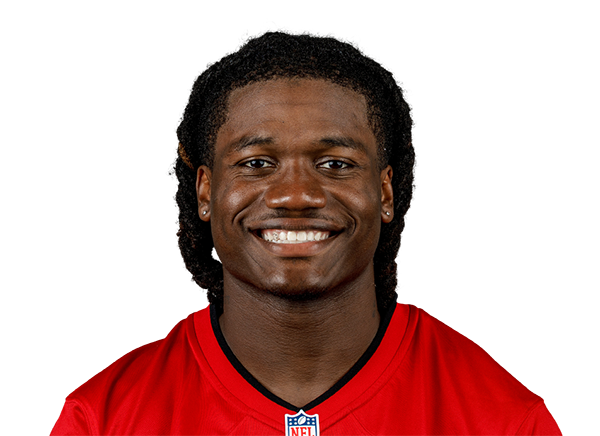
The case against Bucky Irving as a difference-making fantasy running back starts with math that feels uncomfortably familiar to anyone who has owned a talented back stuck in a timeshare. Irving sits at RB18 on our board and carried an aggregate ADP of No. 55 overall as of Sep. 20, 2026 — a solidly middle-round price that reflects real caution, not indifference. The skepticism has a clear source: Tampa Bay's own offensive coordinator volunteered, unprompted, that the team is managing his workload.
“He's on a bit of a pitch count due to the longevity of the season.”
— Zac Robinson, Buccaneers OC
For a fantasy manager, that is a coach openly signaling a plan to cap touches before the season even develops a rhythm. Add that Irving played only 10 games in 2025 and missed 7, and the caution stops looking like an overreaction and starts looking like a rational read of a player who has never proven he can hold up over a full slate while sharing the backfield. That is the strongest version of the skeptic's case, and it deserves a fair hearing before pushing back.
The New Coordinator and the Gainwell Signing
Start with what actually changed around Irving this offseason. Josh Grizzard was fired as offensive coordinator in January 2026, and Tampa Bay replaced him with Zac Robinson, adding T.J. Yates as pass game coordinator and Chandler Whitmer as quarterbacks coach. Baker Mayfield returns as the starting quarterback, so the passing infrastructure isn't being rebuilt from scratch, but the coordinator calling plays is new, and new coordinators bring usage patterns that take time to fully read. At running back, Tampa Bay signed Kenneth Gainwell away from Pittsburgh in March 2026 and explicitly framed him as a pass-catching complement in the running back room — exactly the kind of addition teams make to siphon passing-down work from a lead back. That role used to belong to Rachaad White, and his departure is the vacancy Gainwell was brought in to fill. Mike Evans also left in free agency, but that reshapes the receiving pecking order around Emeka Egbuka and Chris Godwin Jr. more than it touches Irving's workload. On the current depth chart, Irving is still the No. 1 back and Gainwell the No. 2 — which is exactly what a team would say publicly even if it intended to lean on Gainwell in specific game scripts.
What the Snap and Target Shares Actually Show
Here is where the consensus read runs into a problem: the early usage doesn't look like a committee, it looks like a bell-cow with a caveat attached. In Week 1, Irving played 61% of Tampa Bay's offensive snaps, carried 8 times for 45 yards and a touchdown, and caught all 7 of his targets for 48 yards. In Week 2, his role grew rather than shrank — 78% of snaps, 17 carries for 89 yards, and 4 catches. Across those two weeks he posted 183 yards from scrimmage at 5.4 yards per carry, and the tracked numbers show a 71% snap share, 78% of the team's running back carries, an 18% target share, and 57% route participation. Those are not committee splits. A back drawing nearly four-fifths of his team's rushing work while also running routes on more than half the team's dropbacks is functioning as a lead back, regardless of who is listed behind him on the depth chart.
Why the Talent Was Never the Real Question
The efficiency isn't new — it's the volume finally catching up to a profile that was already strong. Since entering the league in 2024, Irving has averaged 4.5 yards per rush and 5.0 yards per touch, with a 30.1% forced-missed-tackle rate, and he has posted five games since 2024 with at least 45 rushing yards and 45 receiving yards in the same contest. That is a back who breaks tackles and produces in both phases whenever he gets the ball. The open question was always whether Tampa Bay would feed him enough volume to turn that efficiency into a top-tier fantasy season. Two weeks into a new coordinator's offense, the early answer looks like yes — the market simply hasn't had enough time to fully believe it.
What the Pitch-Count Comment Actually Risks
None of this means the workload-management risk is imaginary. Robinson's comment about pacing Irving for the length of the season should be taken at face value, and it marks the one honest scenario where the skeptics are right. If Tampa Bay trims his carries later in the year to keep him fresh, or leans on Gainwell more heavily on early passing downs as the coaching staff's tendencies solidify, Irving's per-game ceiling could get capped exactly when fantasy playoffs matter most. His 2025 attendance — 10 games played, 7 missed — is a separate, real concern; a team that has already watched this back miss time has extra incentive to manage him cautiously rather than push through soreness in November. And two games is a small sample. A coordinator adjusting scripts in Week 3 or Week 4 could move these shares in either direction before the season settles into a fixed pattern.
The Claim on Irving
Put it together and the picture is a back who has already answered the volume question consensus is still asking, with one real caveat attached. Irving is functioning as Tampa Bay's clear early-down and passing-down back, the coordinator's own words describe pacing rather than benching, and the per-touch talent has been evident for two seasons. The residual risk is genuine: if the pitch-count plan means fewer touches for Irving late in the year, or if Gainwell's passing-down role expands beyond what the first two weeks suggest, the ceiling comes down. At an ADP of 55 overall, the market is already pricing in some of that risk. Given the snap share, carry share, and target share he is carrying right now, Irving is a stronger bet for a top-15 finish among running backs than his draft cost implies.