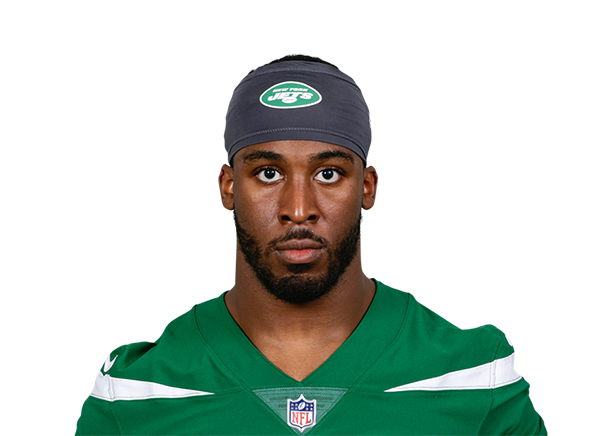
Breece Hall's offensive snap share jumped from roughly 44% in Week 9 to 59% against Buffalo in Week 10, and that number matters more than his modest box score that week. The usage has recovered from his five-game quad absence even though the fantasy points have not followed at the same pace. That split — role up, scoring flat — is exactly the gap a fantasy manager should be paying attention to this week, whether the question is starting him, trading him, or deciding whether to drop him for a hotter name on waivers.
The case here is not that Hall has become a true workhorse. It is that his workload floor is real again, his receiving role is arguably the best-hidden asset on the roster, and the scoring shortfall traces to touchdown variance and a lingering co-back arrangement rather than to any erosion of his opportunity. That distinction should shape how he is valued the rest of the way.
The Jets Backfield Behind Geno Smith and Frank Reich
Hall's situation changed on two fronts this offseason that matter for how defenses and play-callers treat him. Geno Smith arrives at quarterback after the Jets acquired him from Seattle, and Frank Reich was hired as offensive coordinator on February 4, 2026. Aaron Glenn remains the head coach, so the top of the organization is stable even as the play-calling voice is new. A new coordinator installing a new quarterback is exactly the kind of transition that can scramble a backfield's touch distribution for weeks at a time, and that uncertainty is part of why Hall's usage dipped and climbed rather than holding steady.
On paper, the Jets made their intentions clear. Hall was given the non-exclusive franchise tag in March, then signed to a three-year, $43.5 million extension in May that runs through 2028 and makes him one of the league's highest-paid backs. He sits atop the depth chart ahead of Braelon Allen and Isaiah Davis. No back was added from outside the organization to challenge him, and no back with a documented 2025 role departed. The competition for his touches is internal and unchanged: Allen, who was already on the roster last season, remains the one player standing between Hall and a true every-down workload.
The Snap Share Recovery Is the Central Fact
The clearest evidence for buying Hall now is the snap trend itself. He played only 27 offensive snaps in his first game back from the quad injury in Week 9, a cautious ramp-up that is typical for a soft-tissue return. By Week 10 that number rose to 59% of the Jets' offensive snaps. Through Week 10 he also held 59% of the team's running-back carries, 54% of total offensive snaps, and 34% of red-zone opportunities. Those are lead-back numbers, not committee-back numbers, and they came in the same stretch the counting stats looked unremarkable. When opportunity climbs before production does, the usual pattern is that production catches up, not that the opportunity evaporates again.
The Receiving Role Is the Part the Box Score Hides
The more interesting number through Week 10 is Hall's receiving work. He caught 17 of 18 targets, a 94.4% catch rate, with zero drops. That level of target security is not accidental — it reflects a quarterback and coordinator who trust him in the passing game, which matters more in a transition year than raw carry totals do. In Week 10 alone he added four catches for 67 yards to his 11 carries for 41 yards, producing 108 scrimmage yards in a game the Jets lost by 19 points. A back who is this reliable in the passing game keeps a weekly floor even when the rushing numbers are modest, and that floor is what makes him usable on a bye week or in a flex spot even during a down scoring stretch.
Why the Market Still Treats Him as a Sell
The honest counter-argument deserves real weight here. Over the two weeks before the Week 11 outlook, Hall and Allen were nearly even in snaps — 68 to Hall, 71 to Allen — which means the 59% figure arrived in only his second game back and may reflect a cautious return-to-health ramp rather than a locked-in workload shift. Hall also shares goal-line work with Allen, which caps his touchdown equity regardless of how many touches he accumulates. Four full games in 2026 saw him clear 10 fantasy points each time, yet none reached 20. FantasyPros' rest-of-season consensus places him at RB20, and a separate evaluation flagged quarterback uncertainty, the committee arrangement, and a difficult projected playoff schedule as reasons to consider selling.
That case is reasonable, and it is the right reason to temper any top-15 expectation. But it does not argue that Hall's role is shrinking — it argues that his ceiling is capped by Allen's continued involvement, not that his floor is in danger. A player who is targeted 18 times in five games and catches nearly all of them, while also handling the plurality of carries, remains a weekly fantasy starter even in a down-scoring stretch. The gap between a sell-low take and a buy-low take often comes down to whether the role or the result is given more weight. Here, the role is intact.
What to Do With Him Right Now
Treat Hall as a weekly RB2 with a receiving-driven floor rather than a touchdown-dependent upside play. He should remain in every lineup in PPR and half-PPR formats given the target security, and he is a reasonable flex even in standard scoring because of his share of running-back carries. If a league-mate is offering to buy him at his current trade value — recently pegged in the low-to-mid 30s on a 100-point scale, outside the top 20 overall — that is a mild undersell relative to a snap share that just climbed to 59% behind a quarterback and coordinator still settling in. Holding him through the uncertainty of a new offensive staff is the more defensible position than selling into a down week. The realistic forecast is a top-20 rest-of-season finish with weeks that look better than that when the touchdowns arrive, not a top-15 workhorse outcome that the shared backfield does not support.