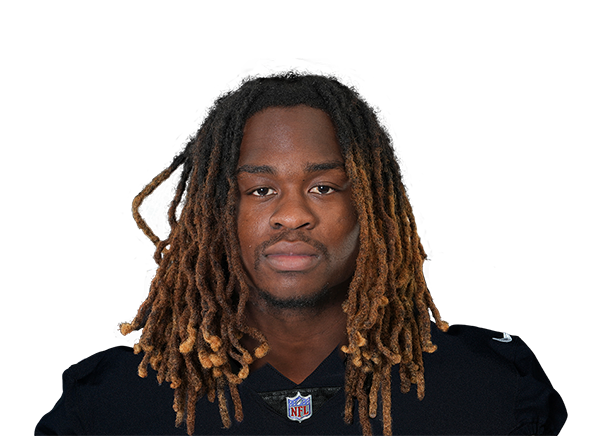
Ashton Jeanty's foot and ankle issues pushed him out of the fantasy community's preseason top-five running back conversation, and the weekly rankings reflect that skepticism: ESPN had him at RB10 for Week 6, Yahoo had him at RB11. Neither service treats him as an elite back right now. The claim here is simple and goes against that grain: by the time this season ends, Jeanty finishes as a top-five running back, not because the injuries are fake, but because his role never actually shrank.
That matters today because Jeanty was removed from the Raiders' injury report entirely ahead of Week 6 against Buffalo, after practicing fully on October 14. The foot and ankle concerns that scared off the preseason evaluators are, at minimum, trending the right direction at the exact moment a fantasy manager has to decide whether to buy the recent discount or keep fading him.
The Backfield Crowd Behind Jeanty
The clearest change to the Raiders' backfield this year is the arrival of Mike Washington Jr., a fourth-round pick in the 2026 draft who reportedly made a strong camp case for a complementary role. That is real competition in theory. In practice, the depth chart still lists Jeanty first, Washington second, and undrafted free agent Roman Hemby and Dylan Laube further down the chart. No verified report establishes that Washington has taken meaningful touches from Jeanty, and no offseason departure created a vacancy in the backfield that Jeanty had to win — he already had the job, and he still has it.
The more consequential change sits above the running back room. Kirk Cousins is now the starting quarterback, a change from last season's situation, with Fernando Mendoza third on the depth chart. Klint Kubiak took over as head coach this offseason, and Andrew Janocko is the new offensive coordinator. New play-callers can mean new run-game shares, and that uncertainty is legitimate. But nothing in the available reporting ties Jeanty's recent efficiency dip to a scheme that has deprioritized him — if anything, the coaching staff has been explicit about doing the opposite.
The Touch Count That Won't Budge
Through five games, Jeanty was averaging 22 touches per game. That is feature-back volume by any measure, and it has held even as his per-carry production has not. When a reporter asked Kubiak on October 15 whether the Raiders had considered resting Jeanty, the answer left no ambiguity.
“He's playing.”
— Klint Kubiak
Jeanty has echoed that commitment himself. After the Week 5 loss to New England, he described his threshold for sitting out in blunt terms, and the broader approach he's taking to a banged-up season.
“Unless I can't run, jump, cut, I'm playing.”
— Ashton Jeanty
“Football is a tough game. You're never gonna play feeling 100 percent. So at the end of the day, I just want to go out there and do my best for my teammates and whatever it takes.”
— Ashton Jeanty
Volume this stable, paired with a coaching staff on record refusing to manage his workload down, is the foundation of the top-five case. Efficiency can recover. A benching can't be un-benched. Jeanty has never been at risk of the latter.
The Receiving Role Behind Bowers
The receiving work is what separates this profile from a committee back riding down weeks. Through five games, Jeanty has 22 receptions for 215 receiving yards, making him the Raiders' second-leading receiver by catches — behind only Brock Bowers — and third by yardage. Over Weeks 2 through 5 he averaged 4.0 receptions per game. In Week 4 against Kansas City, he caught six passes for 68 yards to go with 15 carries. In Week 5 at New England, three catches for 50 yards accompanied a quiet 10-carry, 27-yard rushing line.
That receiving floor is the part of Jeanty's profile least vulnerable to an ankle or plantar-fascia issue limiting his burst between the tackles. Pass-game touches do not require the same explosive cut that a stuffed run game does, and the Raiders have kept feeding him there even as the rushing numbers soured. A back catching four passes a week while absorbing feature-back touch volume has a weekly scoring floor that most committee backs simply do not have access to.
The Efficiency Collapse Working Against Him
The honest counter-argument is not about touches — it's about what Jeanty is doing with them. He is averaging 3.3 yards per carry on the season, and across Weeks 2 through 5 that number fell to 2.9 yards per carry on 189 rushing yards. One analysis framed him as the RB21 in scoring output despite RB6-level usage, which is about as stark a gap between opportunity and result as this format produces. The Raiders' offensive line has drawn criticism as part of the problem, and the injury timeline is not a single incident — an ankle injury from August 23 that was aggravated in Week 4, followed by a plantar-fascia flare-up in early October. That is a stacked, not isolated, physical issue, and it is fair to ask whether it is quietly eroding the burst and cutting ability that made him valuable in the first place.
That risk is real and should not be dismissed. But it has to be weighed against what actually happened next: Jeanty practiced fully on October 14 and was fully cleared off the injury report for Week 6, not downgraded further. Volume did not dip during the roughest stretch of his efficiency — it stayed at 22 touches a game. A compromised runner who still commands that workload and that receiving role has more margin for a second-half rebound than the weekly rankings currently price in. Efficiency tends to normalize once an ankle and a foot actually heal; a role this entrenched does not need to be rebuilt from scratch when that happens.
The Call for Fantasy Managers Holding Jeanty
Treat Jeanty as a hold, not a sell, and treat any remaining skepticism in trade value as the buying window. The depth chart has not moved — Mike Washington Jr. has not displaced him, and no departure or scheme change has created a path for someone else to inherit his touches. The workload has not moved either, and the team has said as much out loud. What has moved is efficiency, and efficiency is the single most volatile week-to-week input in fantasy football, especially for a player working through a healing lower-leg injury. A fantasy manager selling Jeanty right now because of a 3.3-yards-per-carry average is selling the most stable asset in this profile — touches and targets — because of the least stable one. The weekly rankings will catch up once the carries start hitting at a normal rate. Until then, this is the definition of buy low.