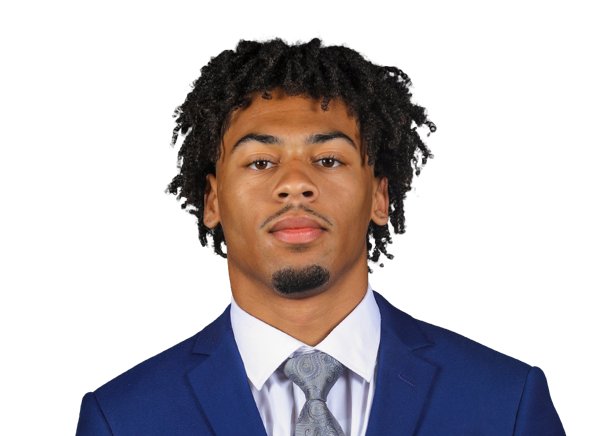
The reasonable case for Antonio Williams is not built on hope. A receiver thrust into a feature role after a season-ending injury to the team's top target saw his snaps and targets spike overnight, and the head coach has publicly committed to feeding him more. In Washington's Week 8 win over Philadelphia, Williams played 50 of the team's 60 offensive snaps, an 83% rate, and ran a route on 31 of 35 pass plays. He led all Washington wide receivers in both snaps and targets that week, ahead of Treylon Burks and Stefon Diggs. Seven targets translated to a 25.9% target share, the kind of number that usually signals a true first read rather than a complementary piece.
“Antonio is one that you'll see getting more targets to go. We'll look through the week.”
— Dan Quinn
“The natural progression is probably Antonio some more. Not necessarily the same spot but a higher volume.”
— Dan Quinn
Those comments, combined with the workload, are enough that some fantasy managers are already treating Williams as a legitimate streaming WR3 or flex option. That is not an unreasonable reaction to the data in front of them. The question is whether it is the full picture.
A Crowded Receiver Room After McLaurin's Injury
Terry McLaurin suffered a knee injury that Dan Quinn described as a torn patellar tendon, and he was reported out for the rest of the 2026 season. That is the event that opened the door for Williams. But it did not open onto an empty room. Washington added Stefon Diggs in 2026 free agency specifically to occupy a prominent starting receiver role, drafted Jaylin Lane to add rotational competition, and had already brought in Treylon Burks as another outside option. Burks was also ruled out ahead of Week 9 with a foot injury, which clears a competitor for the moment but does not remove him from the equation once healthy. Jayden Daniels remains the starting quarterback, a position that is materially unchanged from last season. What did change is the play-caller: Washington moved on from Kliff Kingsbury and promoted David Blough, formerly the assistant quarterbacks coach, to offensive coordinator, with Dan Quinn still in place as head coach.
What Blough's Under-Center Shift Asks of a Third-Round Rookie
Blough's offense is expected to lean more on under-center formations and huddle calls than Kingsbury's shotgun- and no-huddle-oriented system. That is a real scheme change, not a cosmetic one. Under-center, huddle-based structures typically tie more route combinations to run-action and require tighter spacing discipline than the spread-it-and-read-it looks a no-huddle shotgun offense produces. For a receiver who is still a rookie, still learning NFL route depth and timing, that is a harder environment to produce efficiently in even with a full allotment of targets. Volume is not the same question as fit, and the fit question here just got more demanding at the exact moment Williams' workload is expanding.
One Big Workload Has Not Yet Produced Big Output
The efficiency gap is already visible in the sample we have. Despite leading Washington's receivers in snaps and targets in Week 8, Williams caught 5 of 7 targets for 54 yards and scored 10.4 PPR fantasy points, with a 71.1 PFF receiving grade. That is a usable flex score in a pinch, not the line of a true WR3. The caution attached to that performance was specific: his route structure still needs development, and the recommendation was to keep him on fantasy benches until it does. A player can lead his team in targets and still be a work in progress as a route runner, and those two facts are not in conflict. They are the same story told from two different angles.
Why Quinn's Endorsement Still Matters
The honest counter to all of this is that role tends to predict fantasy production better than any single efficiency number, and Williams' role is the strongest part of his case. An 83% snap rate, a route on nearly every pass play, a team-leading target count, and a head coach stating on the record that more volume is coming are not small signals. If Burks' foot injury lingers into more than one game, if Diggs and Lane do not immediately siphon enough of Blough's called targets away from Williams, and if the route-running catches up to the opportunity faster than typical for a rookie, Williams could produce flex-worthy weeks often enough to push into weekly relevance. That path exists. It is just not the most likely one given everything stacked against the efficiency side of the ledger right now.
Where Williams Settles Once the Role Firms Up
Treat the emerging WR3 chatter around Antonio Williams as a role story, not yet an efficiency story. The opportunity is real and Quinn's public comments back it up, but a new play-caller running a more under-center, route-precision-dependent system, combined with Diggs, Lane, and an eventually healthy Burks all competing for the same targets, is a tougher setup than the raw snap count suggests. The most defensible projection is that Williams finishes outside the top 20 wide receivers in 2026 as the efficiency gap persists longer than the volume story implies. The actionable takeaway for managers is to hold him as a speculative, matchup-dependent flex rather than a weekly starter, and to watch the route-running tape over the next several weeks before trusting the price the hype has already assigned him.